


Learn
Copper Uglies: What They Are and How Long They Last
Copper uglies is a social-media name, not a medical diagnosis, for skin that looks red, flaky, dull or crepey after starting copper peptides.
By the Skingenetix Research Team, medically reviewed by Dr Esther Bodde, 9 October 2026
0
Studies that have measured copper uglies
No study has measured it, and no study says how long it lasts. The best evidence we have is one controlled facial trial (Badenhorst 2016).
39 of 40
Women tolerated a GHK-Cu serum for 8 weeks
In the one controlled facial trial (Badenhorst 2016). The result belongs to that serum, not to ours.
1 of 40
Had minor skin reactions
She stopped using the products, and the symptoms settled without medical treatment (Badenhorst 2016).
The best evidence we have is one controlled facial trial, appraised on our copper peptide research page: 39 of 40 women tolerated a GHK-Cu serum for 8 weeks. If you are unsure whether a change in your skin is a reaction, our skin concerns page is a good place to start.
The short answers on copper uglies:
- What are copper uglies? An internet term for a rough patch some people describe after starting copper peptides. It is not a measured effect.
- How long do copper uglies last? Nobody knows. No study has followed anyone through it, so any number you read online is a guess.
- What should you do? If your skin reacts, stop the product. If the reaction persists, ask a pharmacist or dermatologist. Do not push through it.
What are copper uglies?
“Copper uglies” is slang from forums and videos. People use it for skin that looks worse after starting a copper peptide product, with redness, flaking, dullness or a crinkled, crepey look. Some also describe a hollow look under the eyes.
It is not a term from dermatology, and it has no agreed definition. That matters, because it means two people using the phrase may be describing quite different things.
Is it a real side effect? What the one trial recorded
The question behind “side effects of copper peptides” is simple: what happened to real people in a controlled study? The only controlled facial trial of GHK-Cu on its own is Badenhorst 2016, which we appraise in full in our article on the Badenhorst 2016 trial.
- 40 women aged 40 to 65 used a GHK-Cu serum twice a day for 8 weeks.
- 39 of the 40 tolerated it. The authors report none of the peeling, dryness or redness they were watching for.
- One woman had minor skin reactions on both sides of her face. She stopped using the products, and the symptoms settled without medical treatment.
Read this with care. The trial was funded by the company that makes the serum. It never stated how much GHK-Cu the serum contained, so the result belongs to that serum, not to ours. Our 2% products have no tolerance study of their own.

Copper uglies vs purging: are they the same?
“Purging” is a word borrowed from exfoliating products. People use it for a rough patch they believe is skin clearing itself before it improves.
No study has shown that this happens with copper peptides, and we do not use either word as an explanation. If your skin looks worse, the sensible assumption is that it may be reacting to something, not that it is part of a process you should wait out.
What causes copper uglies: what is known and what is guesswork
Known: a small share of people react to almost any skin product, and one woman in the trial did.
Guesswork: everything else. You will read that copper peptides first “break down” skin before building it back up. That idea comes from laboratory work on cells. It has not been measured in faces, and we do not present it as fact. Other guesses, such as the amount of copper or the strength of the formula, are untested too.
How long do copper uglies last, and are they reversible?
We cannot tell you, and neither can anyone else yet. No study has timed it, so we give no number of days or weeks.
What we can say is what the trial recorded: the one woman who reacted stopped, and her symptoms settled without medical treatment. That is a single case, not a promise. If a reaction does not fade after you stop, see a pharmacist or dermatologist.
What you will read online vs what was measured
| What you will read online | What was measured |
|---|---|
| “Demolition before construction” | Seen in laboratory cells only; never measured in faces |
| “Lasts 4 to 6 weeks” | No study |
| “Use 0.5 to 1%” | No study |
| “A 2023 review of 12 studies and 512 people” | Not in PubMed. We searched for it and found nothing matching |
| “Most people react” | 1 of 40 women in the one controlled trial, of a serum whose strength was not stated |
The point of the table is not that these claims are false. It is that none has a study behind it.
What to do if your skin reacts
If your concern is acne, this article does not cover it. Ask a pharmacist or doctor.
Could the rest of your routine be the cause?
Quite possibly. A copper peptide is rarely the only new thing. Pure L-ascorbic acid, strong exfoliating acids and high-strength retinol can each irritate skin by themselves, and no combination with a copper peptide has been trialled.
Use those at a different time of day from your copper peptide, and add only one new product at a time. If you change three things at once, you cannot tell which one your skin is reacting to.
Are GHK-Cu injections the same thing?
No. The reactions people discuss after injections are a different use from a cream or serum on the skin. Injections and powders sold online are a different, unregulated use, and nothing in this article is about them. If you are considering them, speak to a doctor.
Before you try a copper peptide serum
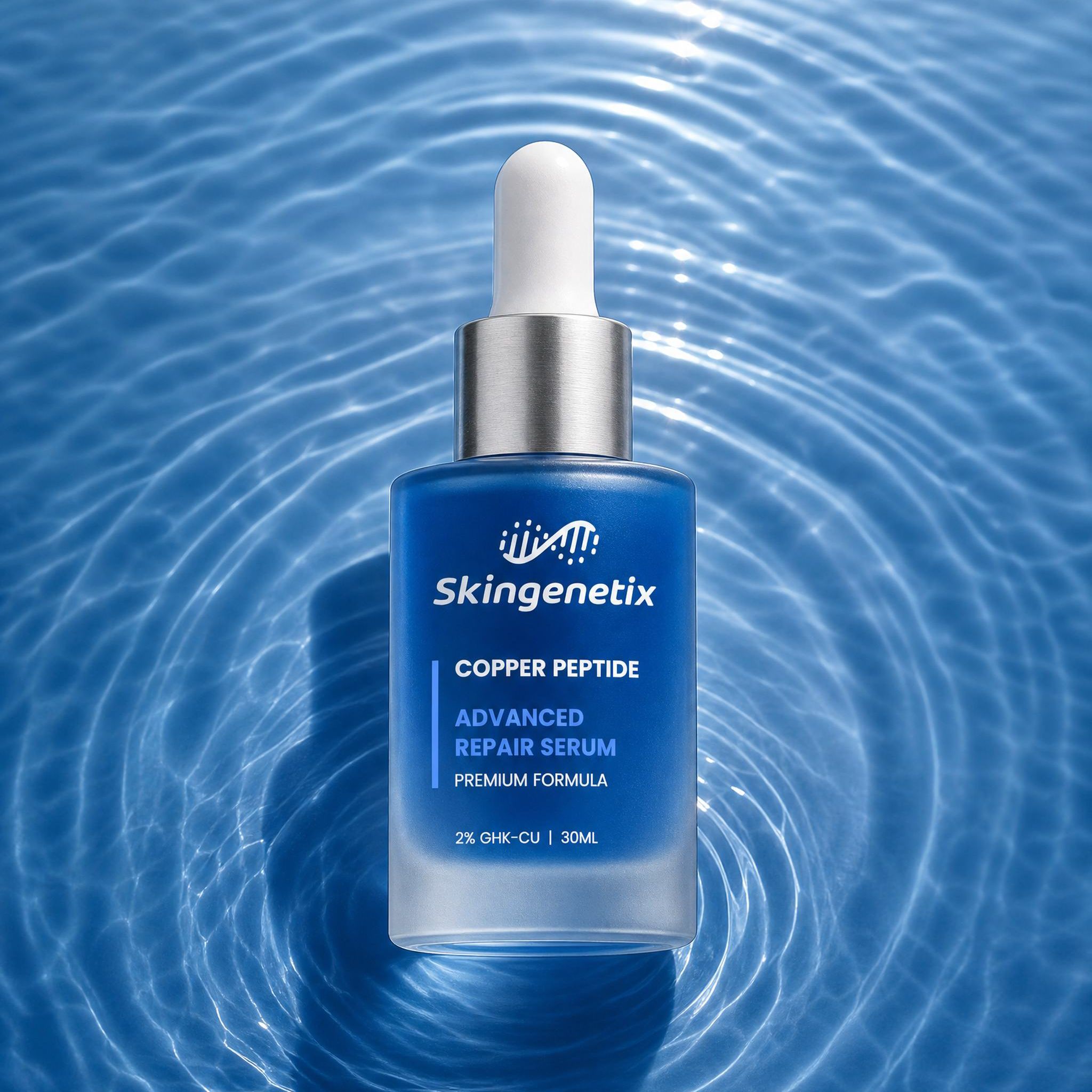
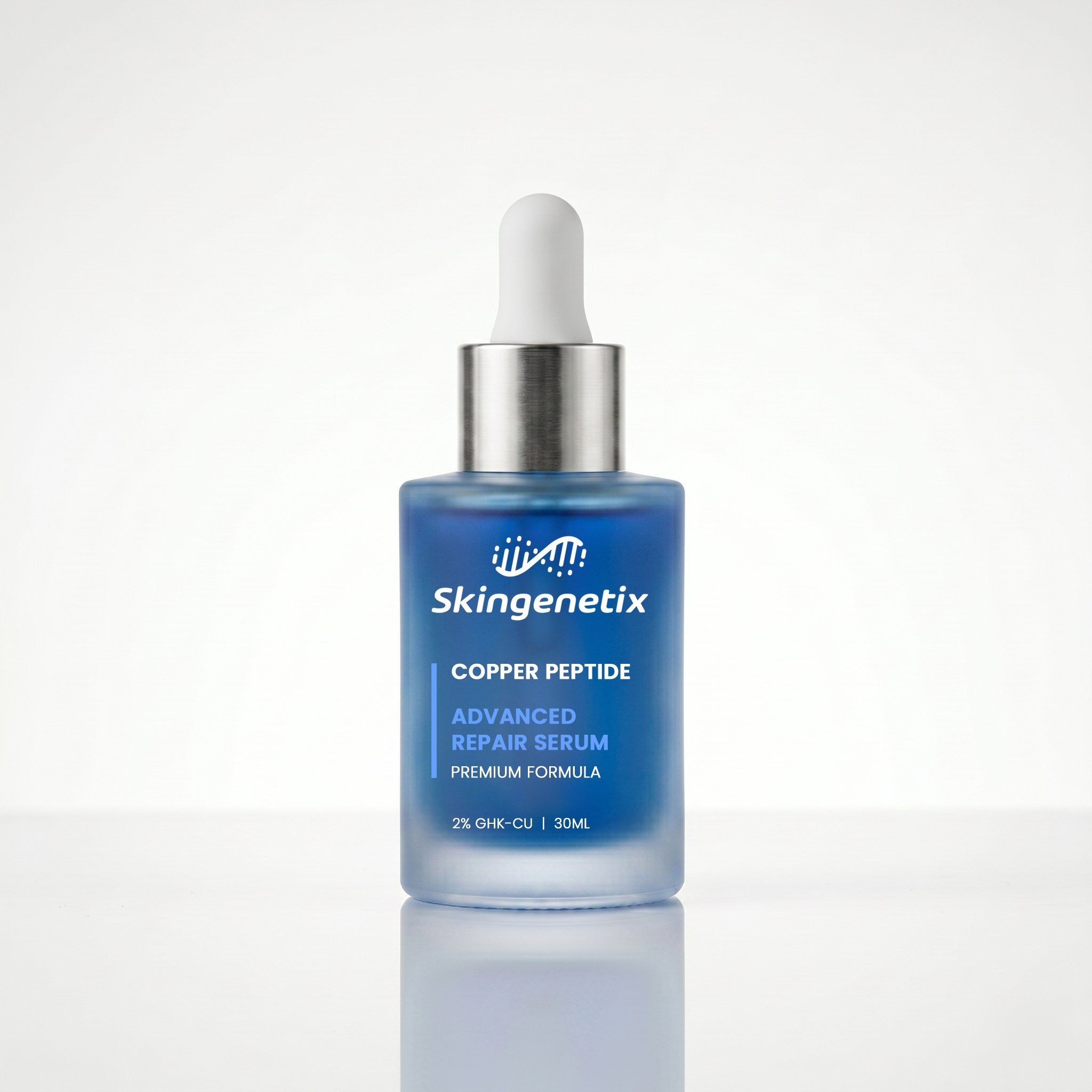
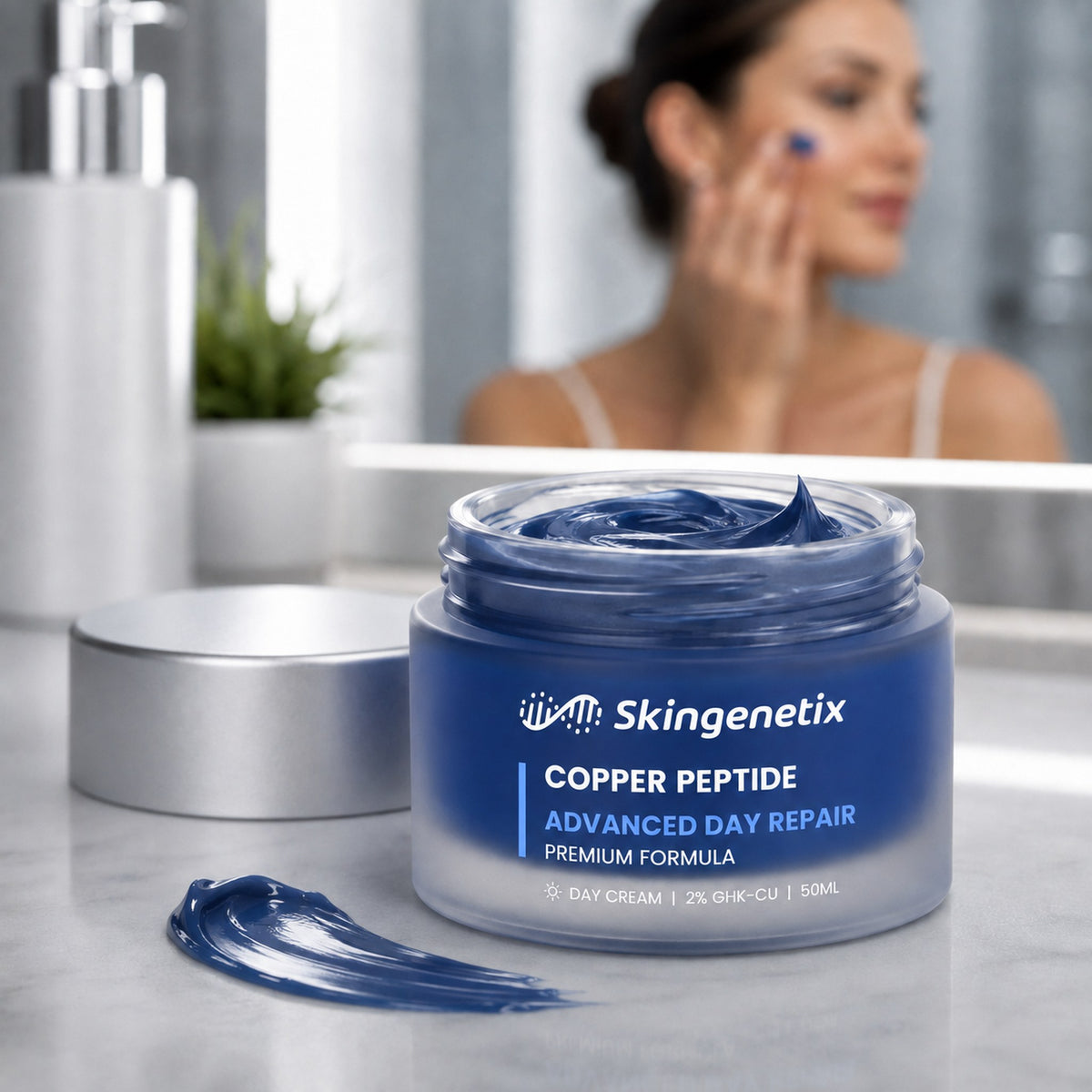
If you decide to try one, our Copper Peptide GHK-Cu Renewal Serum contains 2% GHK-Cu. Patch-test first, and remember that the trial above tested a different serum, not ours.
Frequently asked questions
Do copper peptides help with wrinkles?
In Badenhorst 2016, wrinkle volume near the eye fell 24.1% with a GHK-Cu serum, against 15.0% with the plain serum base, over 8 weeks in 20 women, which the paper reports as a 55.8% greater reduction than the plain serum base. The base lacked the nano-carrier as well as the peptide, so the gap covers both. It is one small, maker-funded trial.
What are the common side effects of copper peptides?
In the one controlled trial, 1 of 40 women had minor skin reactions that settled after she stopped. Beyond that, no study has set out to list the side effects of copper peptides, so we do not claim a full list.
Appraised by the Skingenetix Research Team. Medically reviewed by Dr Esther Bodde, Cosmetic & Medical Physician.
Last reviewed 9 October 2026.
Read the evidence

The Badenhorst 2016 trial

Copper peptide research
Skin concerns