


Ingredient Research
A dual-peptide complex shown to increase collagen production in laboratory (in-vitro) tests and improve the appearance of wrinkles in clinical studies.
What Is Matrixyl 3000?
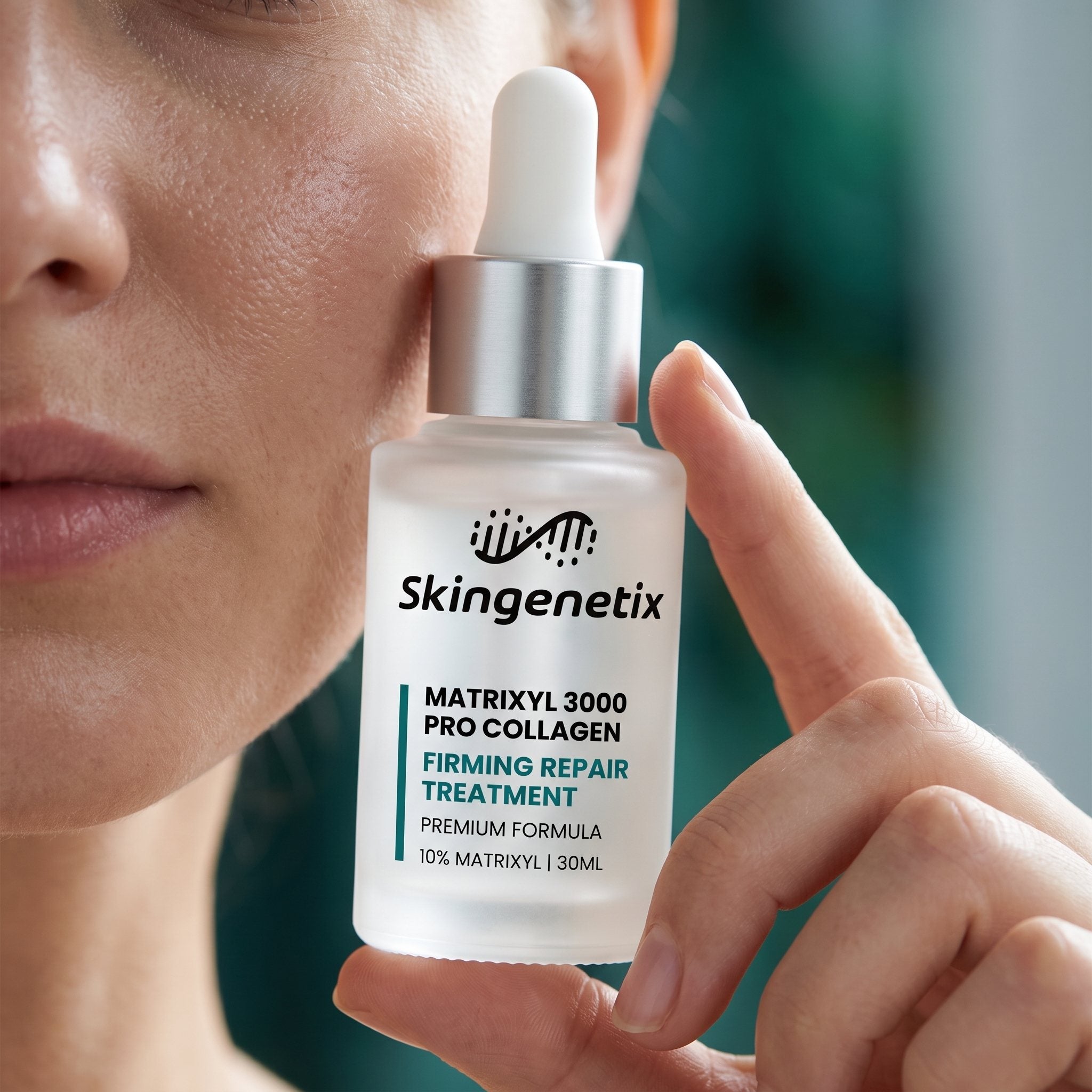
Matrixyl 3000 is a dual-peptide complex developed by Sederma, combining Palmitoyl Tripeptide-1 (pal-GHK) and Palmitoyl Tetrapeptide-7 (pal-GQPR). It works through matrikine signalling - peptide messengers associated with the skin's natural collagen activity.
Both peptides belong to the palmitoyl-peptide family, valued in skincare for supporting the look of firmer, smoother skin and a visibly reduced appearance of fine lines and wrinkles.
They are a popular, gentle alternative to more irritating anti-aging actives, suitable for sensitive skin and year-round use.
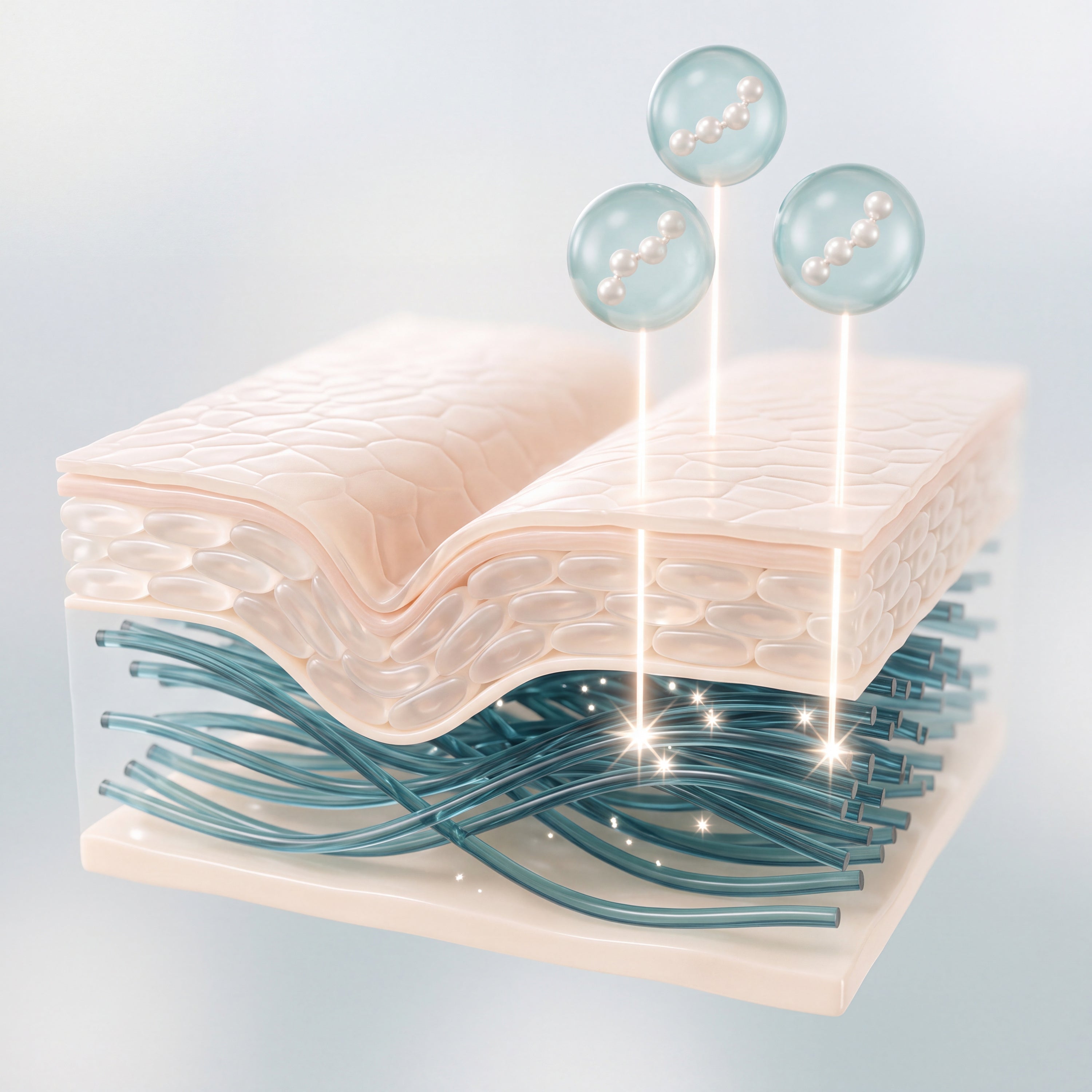
Significant Wrinkle Improvement in 93 Women (independent RCT)
The strongest independent evidence for this peptide class comes from a peer-reviewed, placebo-controlled clinical trial.
Study design: Double-blind, placebo-controlled, split-face RCT. 93 women, ages 35-55, 12 weeks, topical Palmitoyl Pentapeptide-4.
Key results:
- Statistically significant improvement in the appearance of fine lines and wrinkles versus the control side, by instrument and expert grading
- Well tolerated
Robinson LR et al. (2005). International Journal of Cosmetic Science, 27(3):155-160. View on PubMed
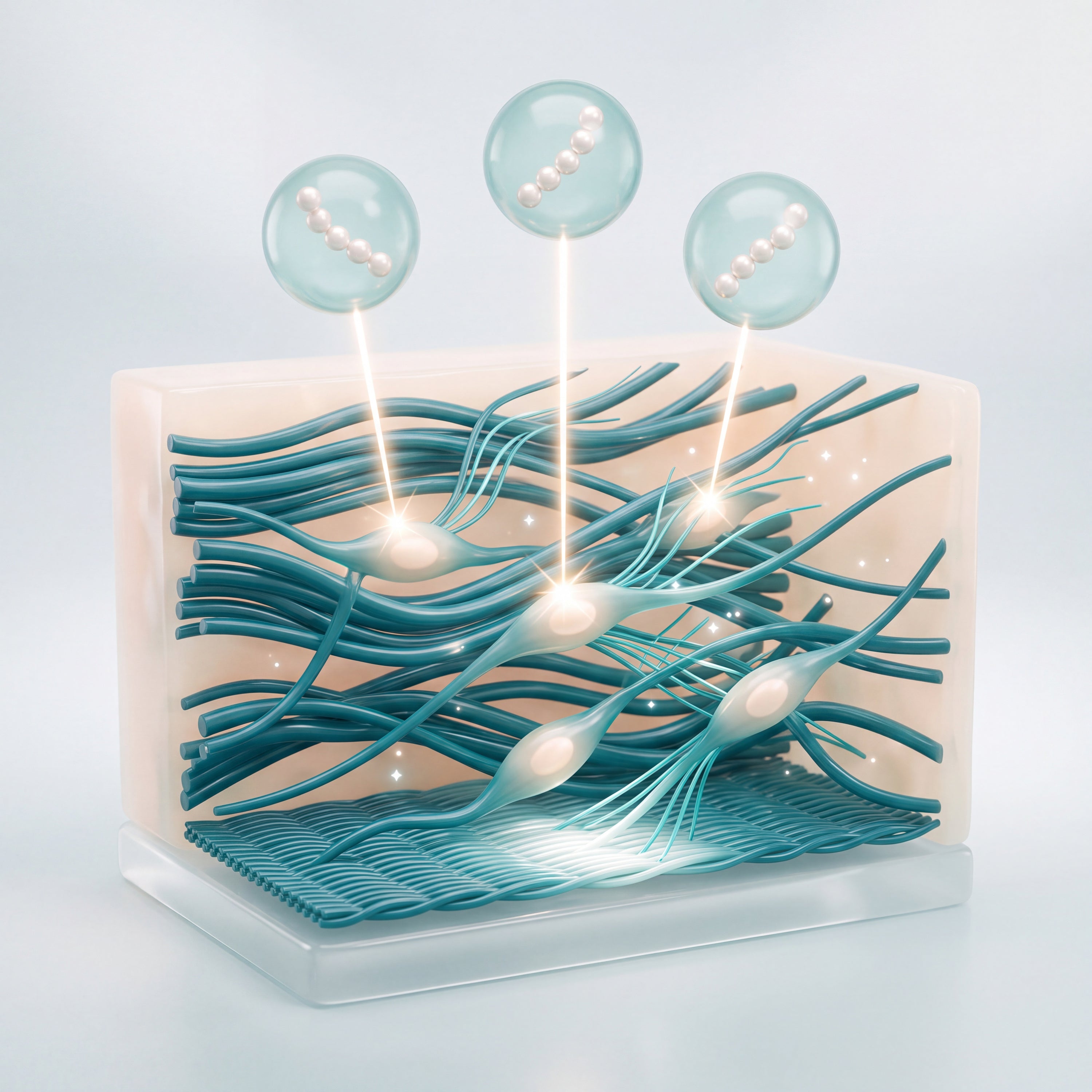
Associated with Collagen Synthesis in Laboratory Tests
In laboratory (in-vitro) testing by the ingredient manufacturer (Sederma), the Matrixyl 3000 peptide duo increased the production of key skin-matrix components in cultured skin cells.
Laboratory (in-vitro) findings:
- +117% Collagen I and +327% Collagen IV production in cultured skin cells
- Increased skin-matrix components (glycosaminoglycans, fibronectin)
Manufacturer in-vitro data (Sederma).

How It Works: Signals Skin Cells to Build Collagen
The peptide sequence behind Palmitoyl Pentapeptide-4 was first identified in laboratory research showing it signals skin cells to produce collagen and other matrix proteins.
Laboratory finding:
- Stimulated fibroblast production of collagen and fibronectin in cell culture (dose-dependent)
Katayama K et al. (1993). Journal of Biological Chemistry, 268(14):9941-9944. View on PubMed
Published References
Topical palmitoyl pentapeptide (pal-KTTKS) provides improvement in photoaged human facial skin
Robinson LR et al., 2005 · International Journal of Cosmetic Science · 27(3):155-160
A pentapeptide from type I procollagen promotes extracellular matrix production
Katayama K et al., 1993 · Journal of Biological Chemistry · 268(14):9941-9944
Biologically active peptides: from a laboratory bench curiosity to a functional skin care product
Lintner K, Peschard O, 2000 · International Journal of Cosmetic Science · 22(3):207-218
Topical Peptide Treatments with Effective Anti-Aging Results
Schagen SK, 2017 · Cosmetics · 4(2):16
Frequently Asked Questions
Everything you need to know about Matrixyl 3000.
What is Matrixyl 3000?
Matrixyl 3000 is a dual-peptide complex developed by Sederma, combining Palmitoyl Tripeptide-1 (pal-GHK) and Palmitoyl Tetrapeptide-7 (pal-GQPR). It works through matrikine signalling - peptide messengers associated with the skin's natural collagen activity - to support the look of firmer, smoother skin.
How much does Matrixyl 3000 increase collagen?
In laboratory (in-vitro) tests by the ingredient manufacturer, Matrixyl 3000 increased the production of collagen and other skin-matrix components in cultured skin cells. In an independent, placebo-controlled clinical trial, a related palmitoyl peptide significantly improved the appearance of fine lines and wrinkles versus placebo over 12 weeks.
Is Matrixyl 3000 gentler than retinol?
Matrixyl 3000 is popular as a gentle alternative to retinol: it supports the look of firmer, smoother skin without the irritation, sun sensitivity or adjustment period often associated with retinoids. This makes it suitable for sensitive skin types and year-round use.
What concentration does Skingenetix use?
Skingenetix uses Matrixyl 3000 at a cosmetically effective level, in line with published research on this peptide complex.
Can I use Matrixyl 3000 with other active ingredients?
Yes. Matrixyl 3000 is compatible with most other active ingredients including vitamin C, hyaluronic acid, niacinamide, and other peptides. It does not cause photosensitivity, so it can be used both morning and evening.
Shop Matrixyl 3000 Products
Explore More Research

Copper Peptide (GHK-Cu)
Supports the skin's collagen and renewal pathways

Acetyl Hexapeptide-8
Helps soften the look of expression lines

PDRN
A skin-conditioning ingredient for firmer, revitalised-looking skin

Glutathione
For a more even, radiant-looking skin tone
Try Matrixyl 3000
Experience the research in our Matrixyl 3000 Collagen Boosting Serum.