


Ingredient Research
PDRN: Salmon DNA Skincare
A salmon-derived polynucleotide (INCI: Sodium DNA), shown in a controlled trial to soften the look of crow's feet.
−20 to −23%
Crow's-feet wrinkles in 28 days
Wrinkle area and number on the 0.1% PDRN side of the face, against −6 to −7% on the retinol side, in a double-blind split-face trial of 31 women (Ye et al., 2026).
3.5×
Improvement vs the retinol side
Crow's-feet wrinkle area fell 23.0% on the PDRN side against 6.6% with retinol, about 3.5 times as much; elasticity rose 44.0% against 24.8%, and eye-bag volume fell 14.8% against 10.2% (Ye et al., 2026).
Day 14
First visible change
Improvements on the treated side were evident by day 14 and, by day 28, exceeded the retinol side on several wrinkle measures. No adverse reactions on either side (Ye et al., 2026).
What Is PDRN?
PDRN (polydeoxyribonucleotide) is a skincare ingredient made from purified salmon DNA fragments, listed on ingredient labels as Sodium DNA. In a 2026 randomised, double-blind split-face study, an eye cream with 0.1% PDRN softened the look of crow's feet by up to 23% in 28 days, more than three times the improvement seen with retinol.
The results were measured with skin imaging, 3D scans and firmness instruments, not only judged by eye.
Written by the Skingenetix Research Team, which compiles the claims registers behind these pages.
By Skingenetix. Medically reviewed by Dr Esther Bodde, Cosmetic & Medical Physician. Every figure checked against the published paper or its PubMed record. Last reviewed 24 September 2026.
At a glance
- What it is: a polynucleotide from purified salmon DNA (INCI: Sodium DNA), used for firmer, smoother-looking skin.
- Best evidence: crow's-feet wrinkle area and number −20 to −23% in 28 days on the 0.1% PDRN side, against −6 to −7% with retinol, in a double-blind split-face trial of 31 women (Ye et al., 2026).
- Independent evidence: none yet. That trial's authors include employees of two skincare companies, and no placebo-controlled trial of topical PDRN has been published.
- Not shown: that results from injections, or from PDRN applied after microneedling, transfer to a leave-on cream. Those are different routes, and this page keeps them apart. After microneedling, a polynucleotide serum improved wrinkle indentation around the eyes significantly within 2 months, where saline took 6: read our appraisal of the 29-woman microneedling trial.
- Safety: no adverse reactions in 31 women with sensitive skin over 28 days. It is salmon-derived, so not vegan, and best avoided with a fish allergy.
- How to use: twice a day, morning and evening, for at least 4 weeks, with SPF in the morning.
For a routine built around PDRN, see skin repair and renewal.

What Does PDRN Do for Skin?
Laboratory research. The molecule interacts with the adenosine A2A receptor and supplies nucleotides through the salvage pathway, both associated with fibroblast and collagen activity (Squadrito et al., 2017). Much of the wider PDRN research concerns injected treatments; on this page we cite only what was measured on skin.
Here is what the evidence shows, strongest first. Each line opens the study behind it.
The trial used a medium-length PDRN at 0.1%; our serum and night cream contain 1%. No study has tested whether more does more, so we make no such claim. Read our appraisal of the 31-woman split-face trial.
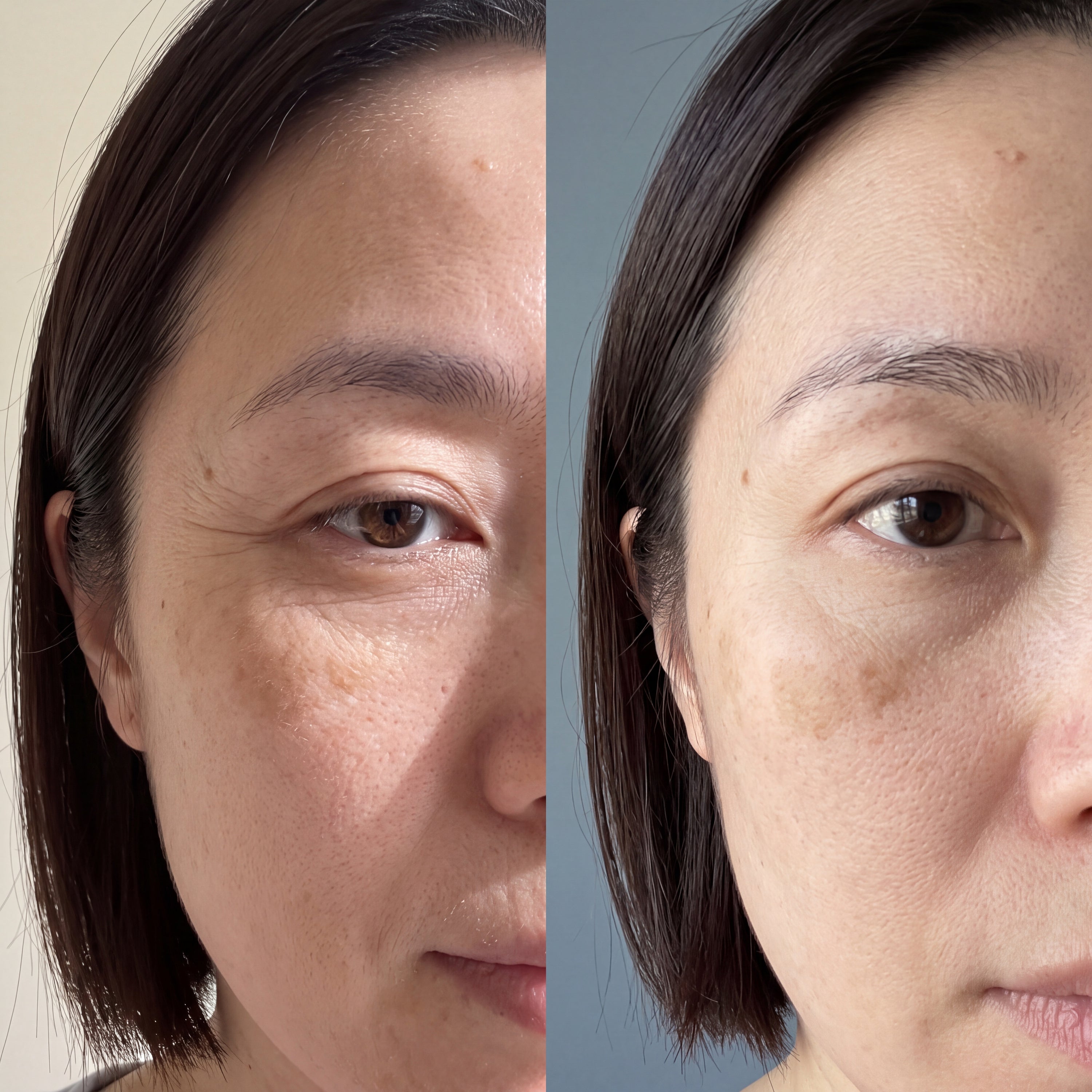
Before
After 28 days
Crow's feet −20 to −23% vs −6 to −7% with retinol (28‑day trial)
Crow's Feet −20 to −23% in 28 Days
The one controlled trial of topical PDRN on intact skin, published in 2026.
Study design: randomised, double-blind, split-face. 31 women aged 35 to 55 with self-reported sensitive skin applied a 0.1% eye cream to one side of the face and a 0.1% retinol cream in the same base to the other, twice a day for 28 days.
Results on the PDRN side:
- Crow's-feet wrinkle area and number −20 to −23%, against −6 to −7% on the retinol side, in the trial's image analysis
- Visible by day 14, and ahead of the retinol side at day 28 on several wrinkle measures
- Firmness and elasticity improved 1.8 times as much; eye-bag volume fell 14.8%, against 10.2%
- No adverse reactions on either side
Ye R et al. (2026). PLOS ONE, 21(7):e0350905. View on PubMed
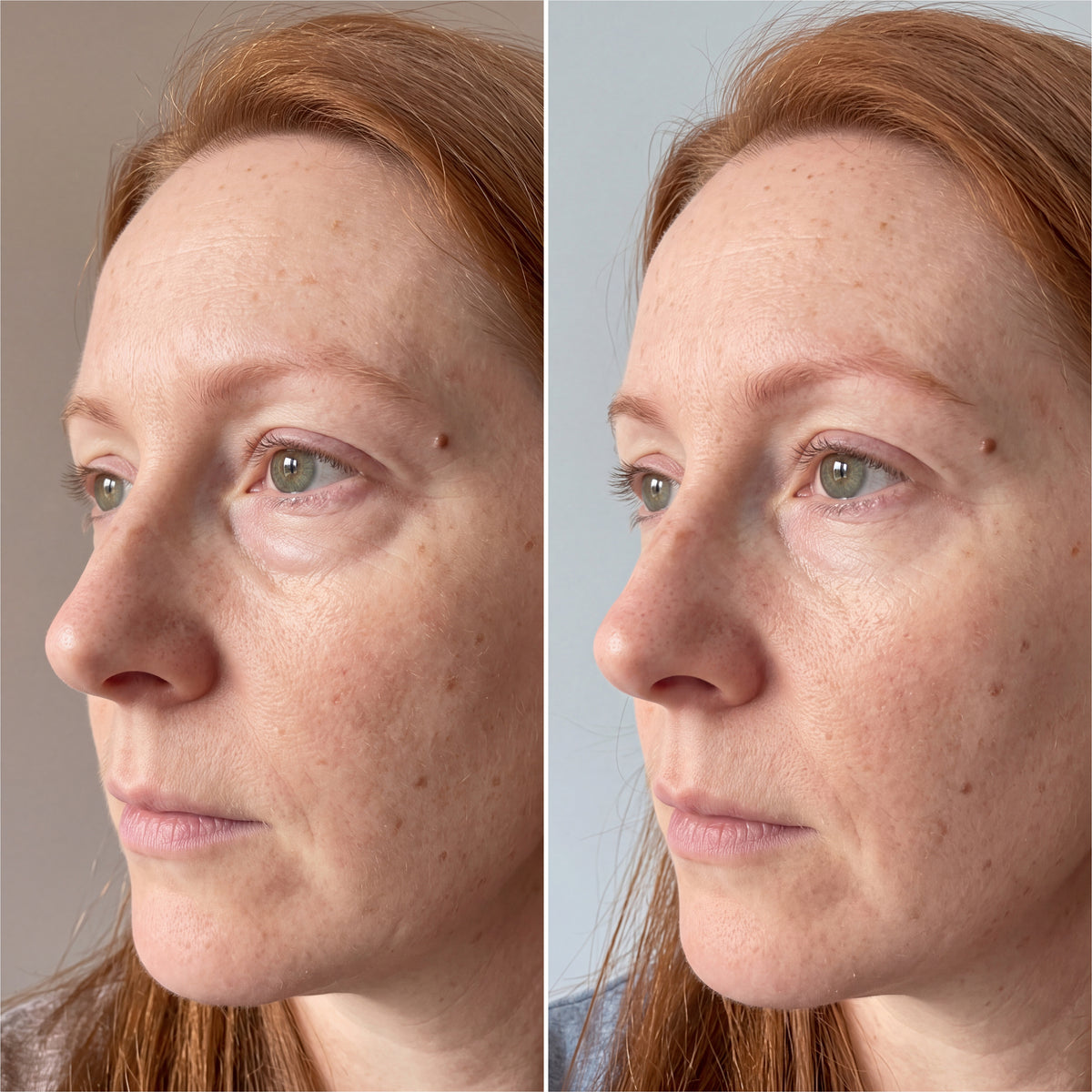
Before
After 28 days
Eye-bag volume −14.8% vs −10.2% with retinol (28 days)
Under-Eye Bags: Volume −14.8% vs −10.2% With Retinol
The same controlled trial scanned the under-eye area in 3D. On the PDRN side, eye-bag volume fell 14.8% in 28 days, against 10.2% on the retinol side.
Study design: the same randomised, double-blind, split-face trial as the first card, 31 women aged 35 to 55 with sensitive skin, twice a day for 28 days.
Results on that side:
- Eye-bag volume fell 14.8%, against 10.2% with retinol, and tear-trough volume 13.7% against 10.2%, measured by 3D skin imaging
- Crow's-feet wrinkle area fell 23.0%, more than three times the retinol side's 6.6%

Nine Collagens Raised in UV-Damaged Skin
A laboratory result, not a result in people. The same 0.1% eye cream used in the clinical trial was applied to samples of human skin that had first been damaged with UV light.
What was measured, against untreated UV-damaged samples:
- Collagen types I, III, IV, V, VI, VII, XV, XVII and XVIII were all significantly higher
- Elastin and fibrillin-1, two proteins of the skin's elastic fibres, were higher too
- The living outer layer of the skin was thicker
How it may work: in skin cells grown in the laboratory, PDRN acts through the adenosine A2A receptor and supplies nucleotides the cells can reuse (Thellung et al., 1999; Squadrito et al., 2017). These are laboratory findings that explain how it may work.
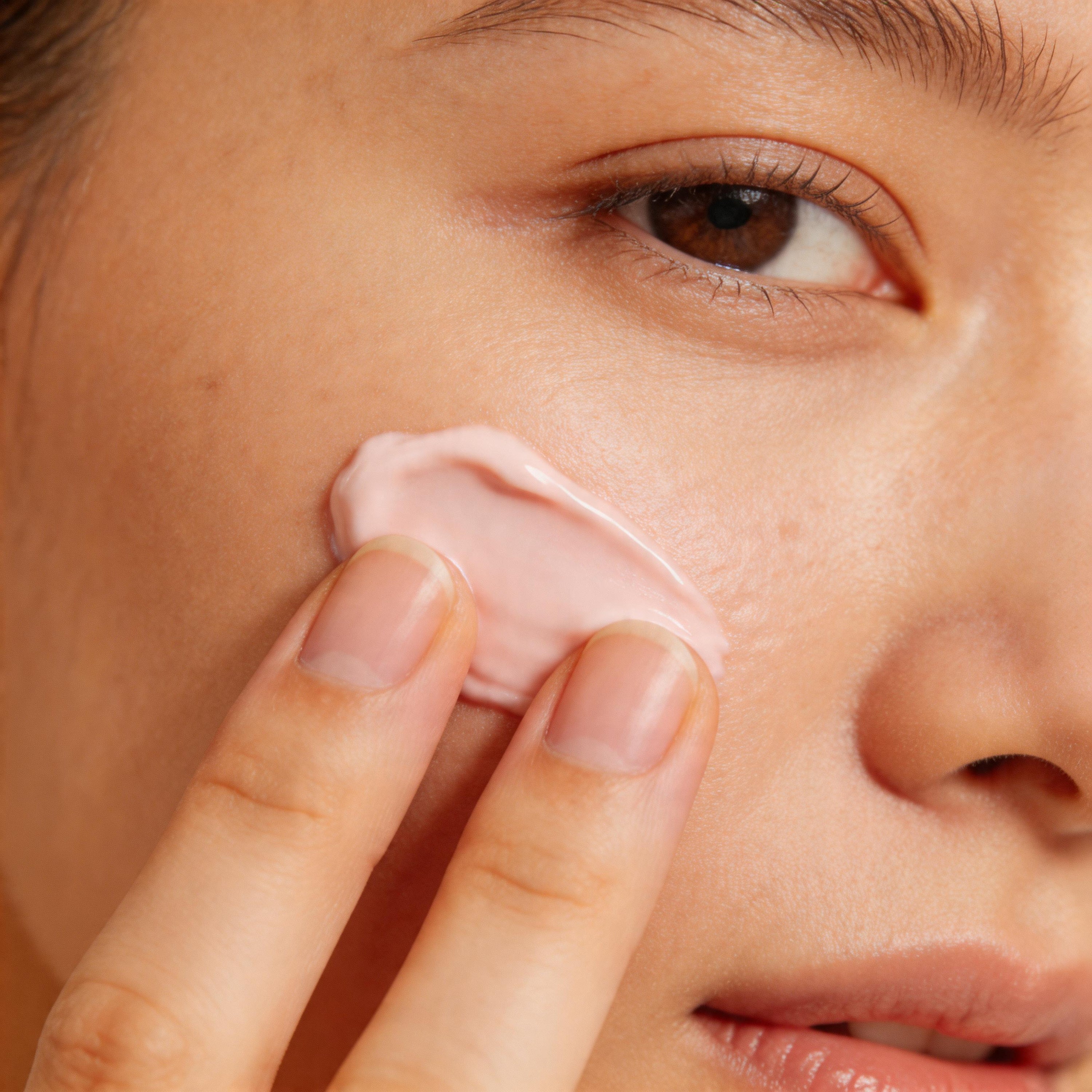
No Reactions in 31 Women with Sensitive Skin
Every participant in the controlled trial had self-reported sensitive skin, and no one reported an adverse reaction on either side of the face.
What was reported:
- 31 women aged 35 to 55 used the cream twice a day for 28 days: no adverse reactions
- The retinol side had none either: both creams were well tolerated
- People with a known allergy to PDRN were excluded. It comes from salmon, so avoid it if you are allergic to fish
Patch-test any new product first.
PDRN vs Retinol: What the Measurements Show
This chart comes from one randomised, double-blind split-face study: 31 women with sensitive skin applied a 0.1% PDRN eye cream to one side of the face and a 0.1% retinol eye cream to the other, twice a day for 28 days.
How much each side improved in 28 days
The change from the start on each side of the same faces, from the paper's Figure 6B. Wrinkles and eye bags fell; elasticity, firmness, thickness and density improved.
0.1% PDRN side0.1% retinol side
Crow's-feet wrinkle area
Number of under-eye lines
Elasticity (R2)
Firmness (F4)
Dermal thickness (ultrasound)
Dermal density (ultrasound)
Eye-bag volume
| Measure | 0.1% PDRN side | 0.1% retinol side |
|---|---|---|
| Crow's-feet wrinkle area | 23.0% | 6.6% |
| Number of under-eye lines | 23.4% | 7.0% |
| Elasticity (R2) | 44.0% | 24.8% |
| Firmness (F4) | 29.6% | 16.3% |
| Dermal thickness (ultrasound) | 11.5% | 5.5% |
| Dermal density (ultrasound) | 9.6% | 4.8% |
| Eye-bag volume | 14.8% | 10.2% |
After 28 days the PDRN side improved significantly more than the retinol side on every measure: crow's-feet wrinkle area fell 23.0% against 6.6%, under-eye lines 23.4% against 7.0%, and eye-bag volume 14.8% against 10.2%; elasticity rose 44.0% against 24.8%, firmness improved 29.6% against 16.3%, and the dermis grew 11.5% thicker and 9.6% denser, against 5.5% and 4.8% (Ye et al., 2026, Figure 6B).

Salmon DNA: Where PDRN Comes From
PDRN is extracted from the sperm cells of chum salmon (Oncorhynchus keta) and purified to remove proteins, leaving the DNA fragments. That is why it is often called salmon DNA skincare, and why its ingredient-label name is Sodium DNA.
Because it is animal-derived, it is not vegan. Products sold as "vegan PDRN" use polynucleotides from non-animal sources such as plants, so they are a different ingredient. Ours is salmon-derived.

What 1% PDRN Means
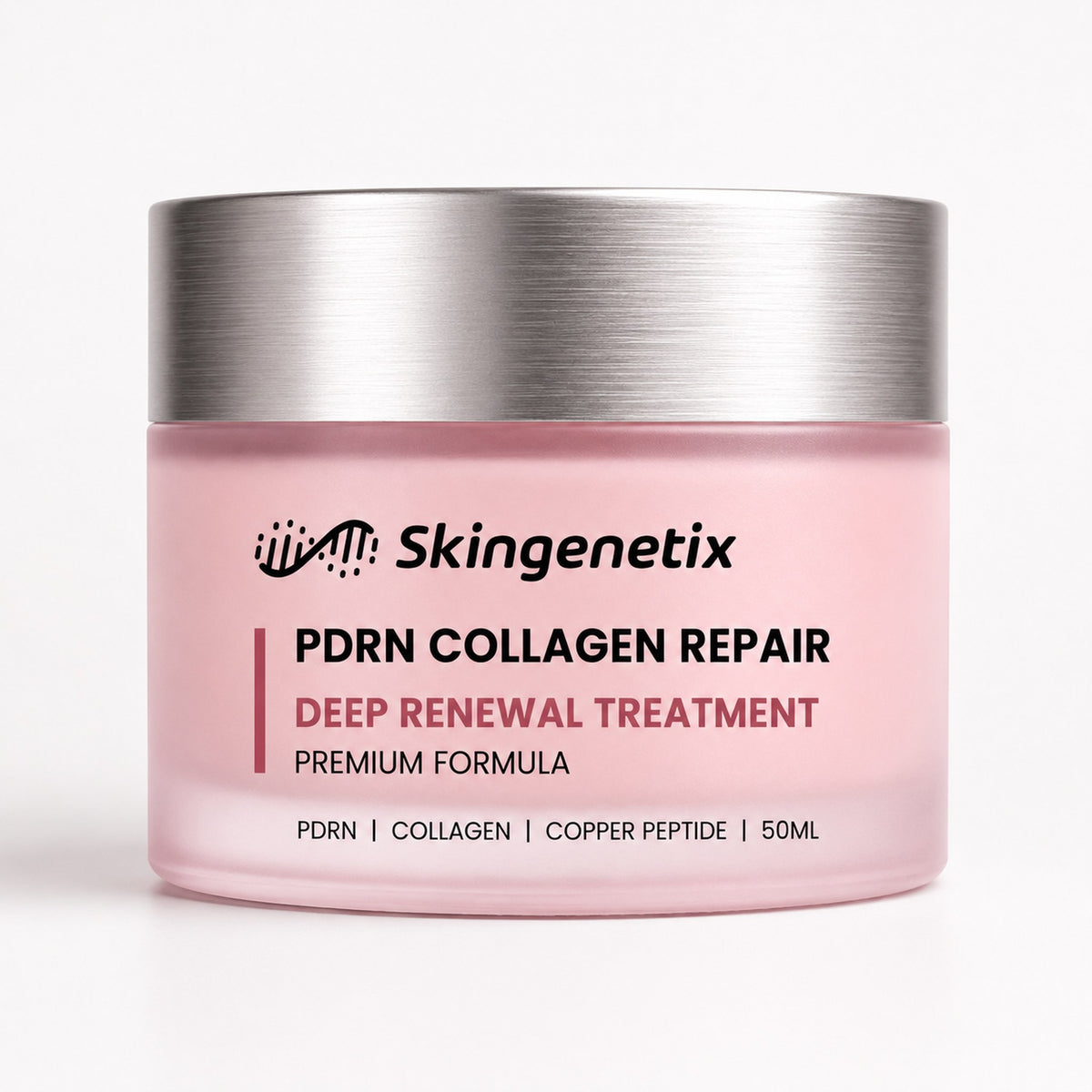
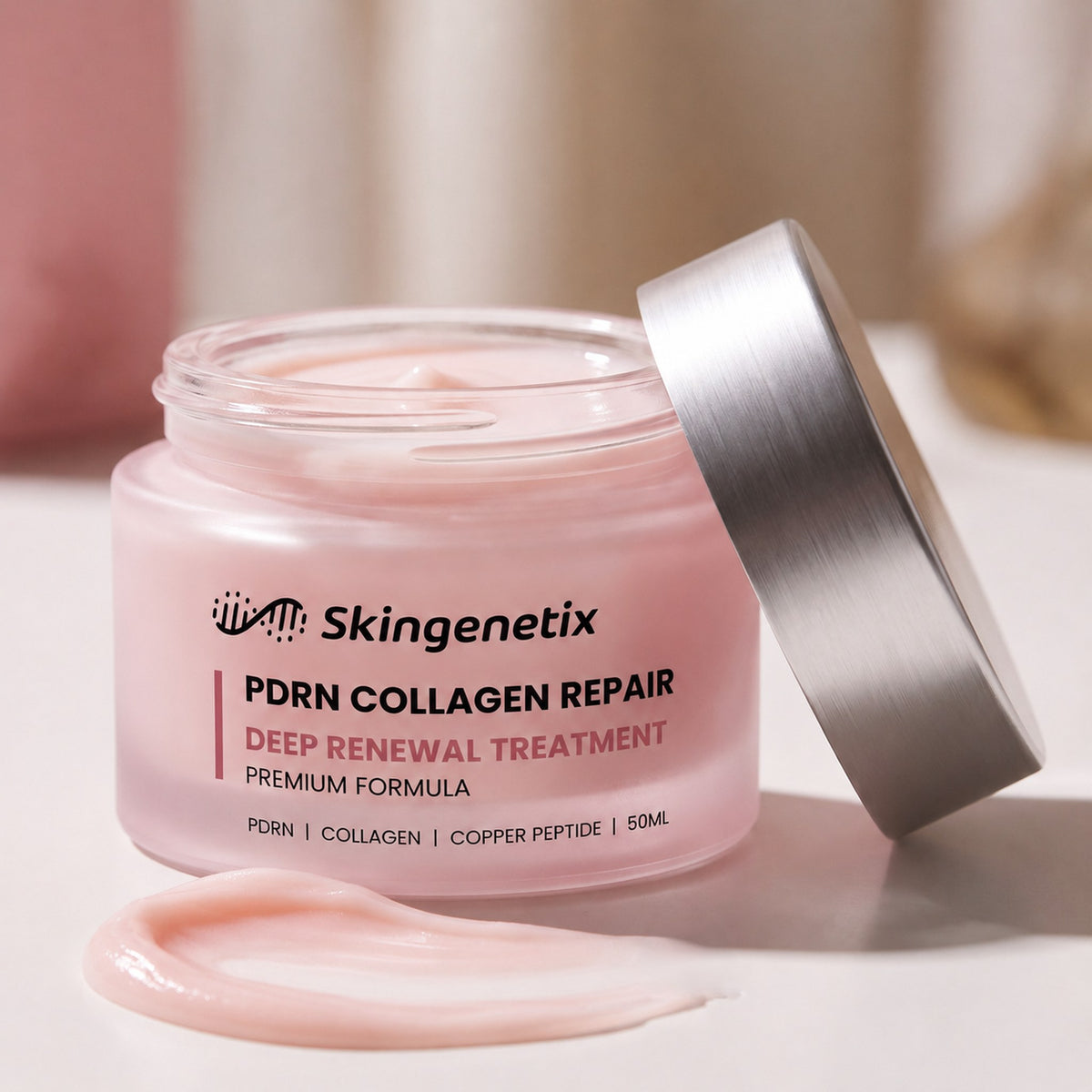
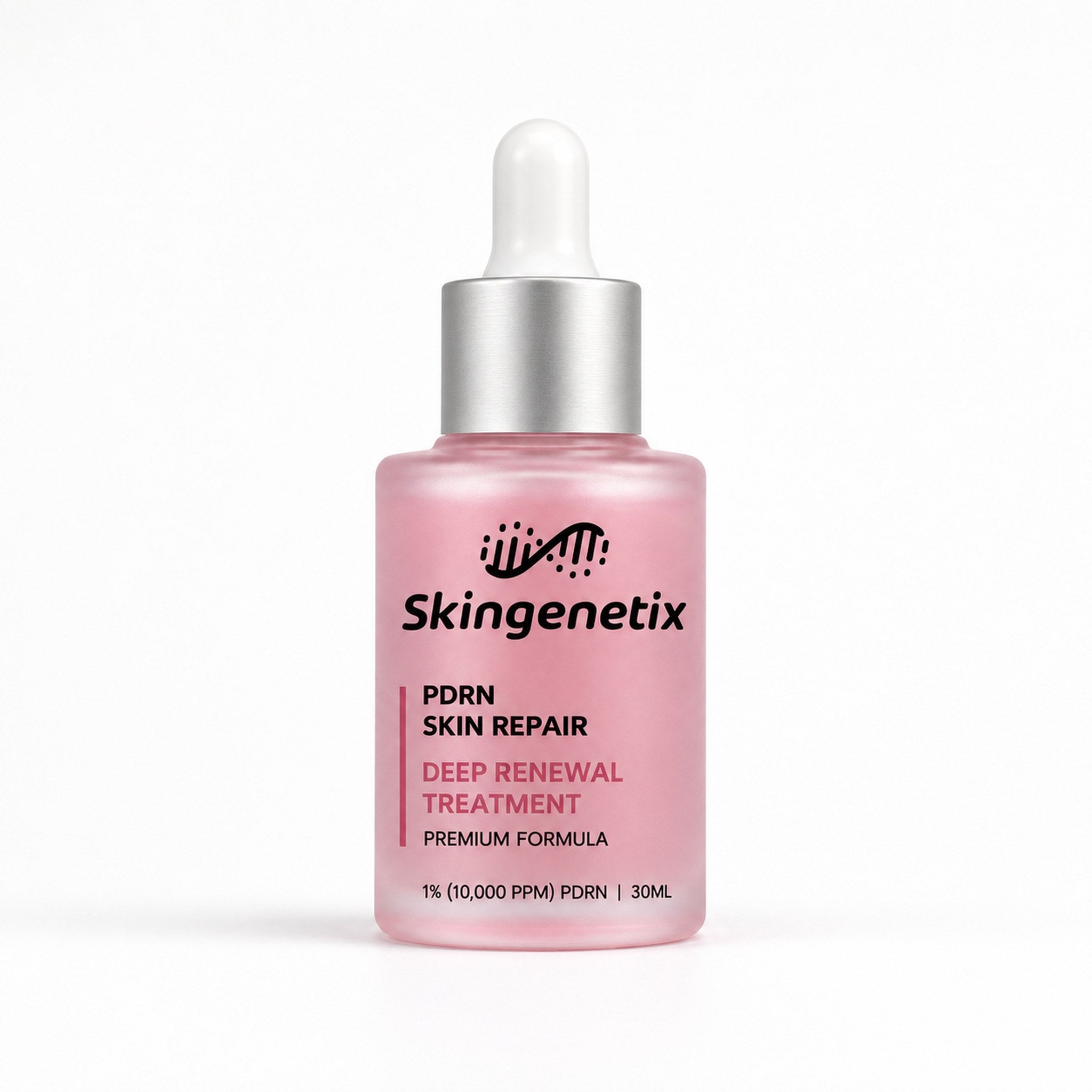
Many products state their strength in ppm (parts per million), which makes them hard to compare. 1% is 10,000 ppm. Both our 1% Renewal Serum and the 1% Collagen Night Cream contain 1% PDRN, and we state the percentage on every product so you can compare like with like.

How to Use PDRN
- 1Start cleanMorning and evening, on freshly cleansed skin, as the trial did.
- 2Give it four weeksTwice a day for at least 4 weeks. The trial saw the first change at day 14 and measured its results at day 28.
- 3Finish with SPFEvery morning, as the last step of your routine.
It is not an acid or an exfoliant, so it layers easily with copper peptide and other peptides. Patch-test any new product first.
PDRN Evidence & Sources
Every study this page relies on, with its published title, our reading of it and a link to the source. Graded A controlled human trial measured by instrument · D cells or animals · Review a summary of other work.
| Study | Grade | What it found |
|---|---|---|
Topical medium-length PDRN enhances dermal extracellular matrix repair in photodamaged skin Ye R et al., 2026 · PLOS ONE · 21(7):e0350905 View on PubMed → | A | 31 women aged 35–55 with sensitive skin, 28 days, randomised, double-blind, split-face; no placebo side. Crow's-feet area and number −20 to −23% vs −6 to −7% with retinol; firmness and elasticity 1.8× the retinol change; no adverse reactions. The only controlled trial of topical PDRN on intact skin. |
Polydeoxyribonucleotides enhance the proliferation of human skin fibroblasts: involvement of A2 purinergic receptor subtypes Thellung S et al., 1999 · Life Sciences · 64(18):1661–1674 View on PubMed → | D | Human skin fibroblasts in culture grew faster with PDRN, and an A2 adenosine-receptor blocker stopped the effect. The founding laboratory study of the A2A mechanism. |
Pharmacological Activity and Clinical Use of PDRN Squadrito F et al., 2017 · Frontiers in Pharmacology · 8:224 View on PubMed → | Review | Explains the mechanism (adenosine A2A receptor and the nucleotide salvage pathway) and the safety record of the injectable prescription product. Cited here for mechanism only. |
Applications of Marine Organism-Derived Polydeoxyribonucleotide Kim TH et al., 2021 · Marine Drugs · 19(6):296 View on PubMed → | Review | A review of PDRN as a family of DNA-derived drugs of 50 to 1,500 kDa, mainly extracted from the sperm cells of salmon trout or chum salmon. The uses it covers are medical, not cosmetic; cited here only for where PDRN comes from. |
Published titles are quoted exactly as they appear in the journal.
Frequently Asked Questions
Everything you need to know about this ingredient and polynucleotides.
What is PDRN?
PDRN (polydeoxyribonucleotide) is a polynucleotide ingredient (INCI: Sodium DNA) derived from purified salmon DNA. In a double-blind clinical study it softened the look of crow's feet by up to 23% in 28 days, more than three times as much as retinol.
How does PDRN benefit the skin?
In skincare, it is valued for helping the skin look firmer, smoother and more revitalised. Laboratory research has associated it with fibroblast and collagen activity and with supporting the look of a healthy moisture barrier, which together contribute to a healthier-looking, more radiant complexion.
Do PDRN serums actually work?
In the one controlled trial of a leave-on cream, yes, for what it measured. A 0.1% eye cream softened crow's feet by 20 to 23% in 28 days and firmed the under-eye area, measured by skin imaging and firmness instruments, against a 0.1% retinol cream on the other side of the same faces. That is a single trial of 31 women, published in 2026, so it is good evidence for those effects and no evidence for anything else. Serums and creams at other strengths, including our 1% products, have not been trialled; we state the percentage so you can compare.
How long does PDRN take to work?
In the one controlled trial, improvements on the treated side were visible by day 14, and the results were measured at day 28: crow's-feet wrinkles down 20 to 23% against 6 to 7% with retinol. Give it at least 4 weeks of twice-daily use.
Is PDRN safe for topical use?
In the only controlled clinical study of topical PDRN, 31 women with sensitive skin used it twice daily for 28 days with no reported reactions. As with any new product, patch-test first.
Is topical PDRN the same as the injections?
No. Most of the research is about injections: wound healing, scars, and the skin boosters offered in clinics. Those results describe a medical product placed under the skin, and they do not transfer to a cream. Trials where polynucleotides were applied right after microneedling are a third case again. There is one controlled trial of a leave-on PDRN cream on intact skin, and that is the one this page reports. No study compares a cream with injections head to head.
Can I use PDRN with retinol, and what should I not mix it with?
No combination has been tested. In the trial, the two were used on opposite sides of the face, not together, so there is no evidence on using both at once; if you use retinol, apply it at a different time of day and introduce one new product at a time. It is not an acid or an exfoliant, so it layers easily with copper peptide, other peptides, niacinamide and hyaluronic acid. Apply it to clean skin before your cream, and finish with SPF in the morning.
Who should be careful with PDRN?
It is salmon-derived, so avoid it if you are allergic to fish: people with a known allergy were excluded from the trial. It has not been tested in pregnancy or while breastfeeding, so ask your doctor or pharmacist first. Do not apply it to broken or infected skin, and keep it out of the eyes. Patch-test any new product on a small area for 24 to 48 hours, stop if redness or stinging does not settle, and see a pharmacist or dermatologist if a reaction persists. A cream or serum is a cosmetic; it is not the injected medical product used in clinics, and those results and risks do not apply to it.
Is PDRN salmon sperm? Where does it come from?
PDRN is extracted from the sperm cells of chum salmon (Oncorhynchus keta) and purified to remove proteins, leaving the DNA fragments. On ingredient labels it is listed as Sodium DNA.
Shop PDRN Products
Explore More Research
Heard of the salmon sperm facial? Read Salmon sperm skin care: what it is, and how it differs from the facial.

Copper Peptide (GHK-Cu)
Supports the skin's collagen and renewal pathways

Acetyl Hexapeptide-8
Helps soften the look of expression lines
Matrixyl 3000
A clinically studied peptide for smoother-looking skin

Glutathione
A clinically studied antioxidant for brighter-looking skin
Explore Our Formulations
Discover how this salmon-DNA ingredient supports a firmer, smoother and more revitalised-looking complexion.