


Ingredient Research
The body's master antioxidant - a tripeptide that helps protect the skin against oxidative stress and supports a brighter, more even-looking, radiant complexion.
What Is Glutathione?
Glutathione (GSH) is a tripeptide composed of three amino acids: glutamic acid, cysteine, and glycine. It is the most abundant intracellular antioxidant in the human body, present in virtually every cell. In skincare, glutathione is valued for two reasons: it helps neutralise free radicals that contribute to a dull, tired-looking complexion, and it is associated with a brighter, more even-looking skin tone.
Glutathione exists in two forms: reduced (GSH, the active form) and oxidised (GSSG). The ratio between these forms is a useful indicator of the skin's antioxidant balance. As we age, total glutathione levels decline and the GSH:GSSG ratio shifts toward the oxidised form, which coincides with visible signs of aging, a duller and less even-looking complexion, and reduced antioxidant defence.
Topical glutathione has gained significant interest in skincare for supporting a brighter, more even-looking skin tone and radiance, and for helping protect the skin against UV-induced oxidative stress that can dull the complexion over time.
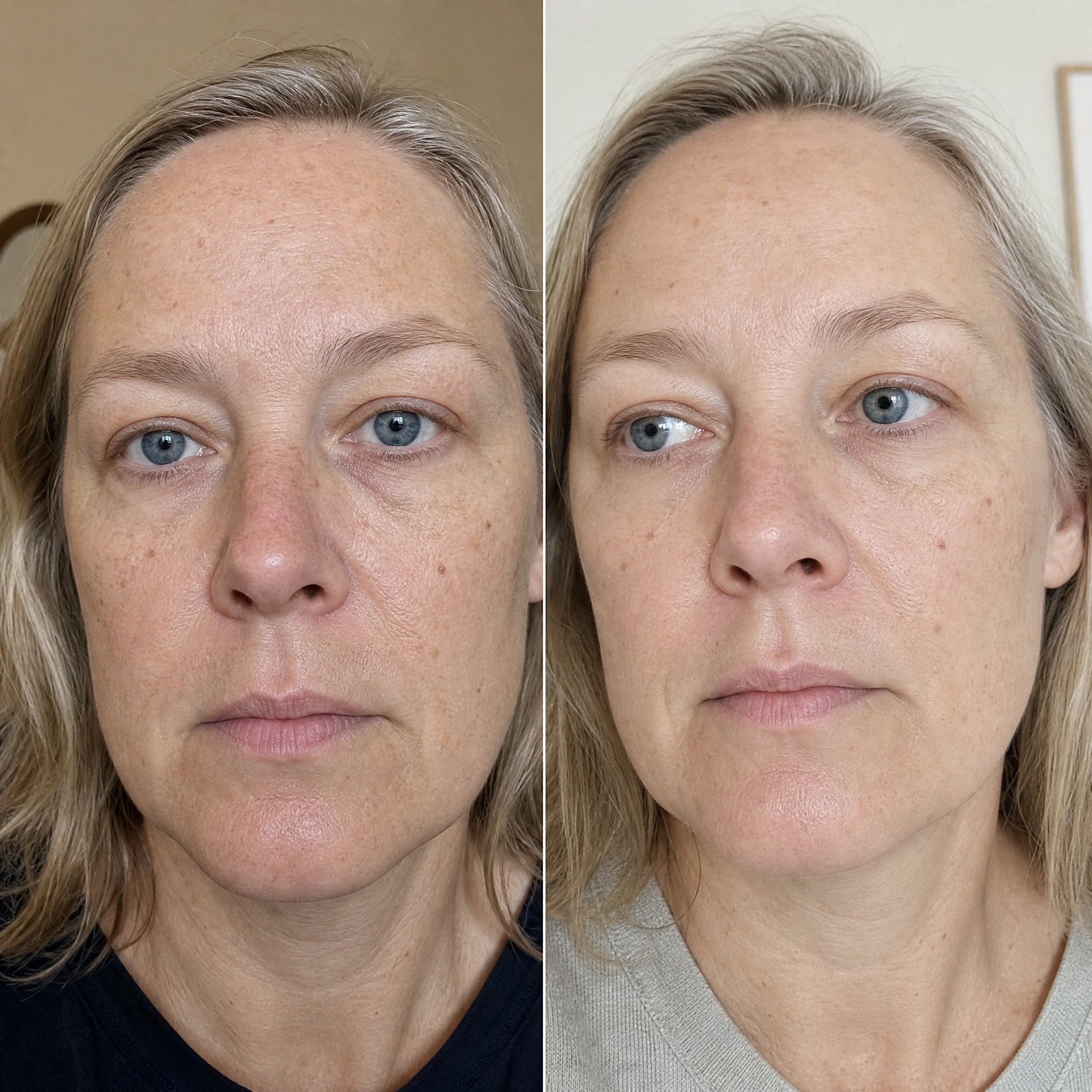
Before
After 10 weeks
More even-looking skin tone vs placebo (p < 0.001)
Visibly more even, radiant tone - 2% GSSG (the exact active)
The key clinical study on oxidized glutathione (GSSG) 2% - the exact active in our formulas - applied topically to the face.
Study design: Randomised, double-blind, split-face, placebo-controlled trial. 30 women aged 30-50, twice-daily application of a 2% GSSG lotion for 10 weeks.
Key results:
- Significantly more even-looking skin tone versus placebo (reduced melanin index, p < 0.001)
- Improved skin moisture and smoothness (p < 0.05)
- Visibly smoother, more radiant-looking skin over 10 weeks
Watanabe F et al. (2014). Clinical, Cosmetic and Investigational Dermatology. View on PubMed
Antioxidant defence against environmental stress
Topical glutathione has also been studied for its antioxidant role in helping protect the look of the skin against environmental stress.
Study design: Randomised, double-blind, placebo-controlled trial of a topical 2% S-acyl glutathione cream.
Key results:
- Greater resilience to UV-induced redness versus placebo (higher minimal erythema dose, p = 0.0003)
- Supports the skin's antioxidant defence against environmental oxidative stress
Grandi V et al. (2019). Giornale Italiano di Dermatologia e Venereologia. View on PubMed
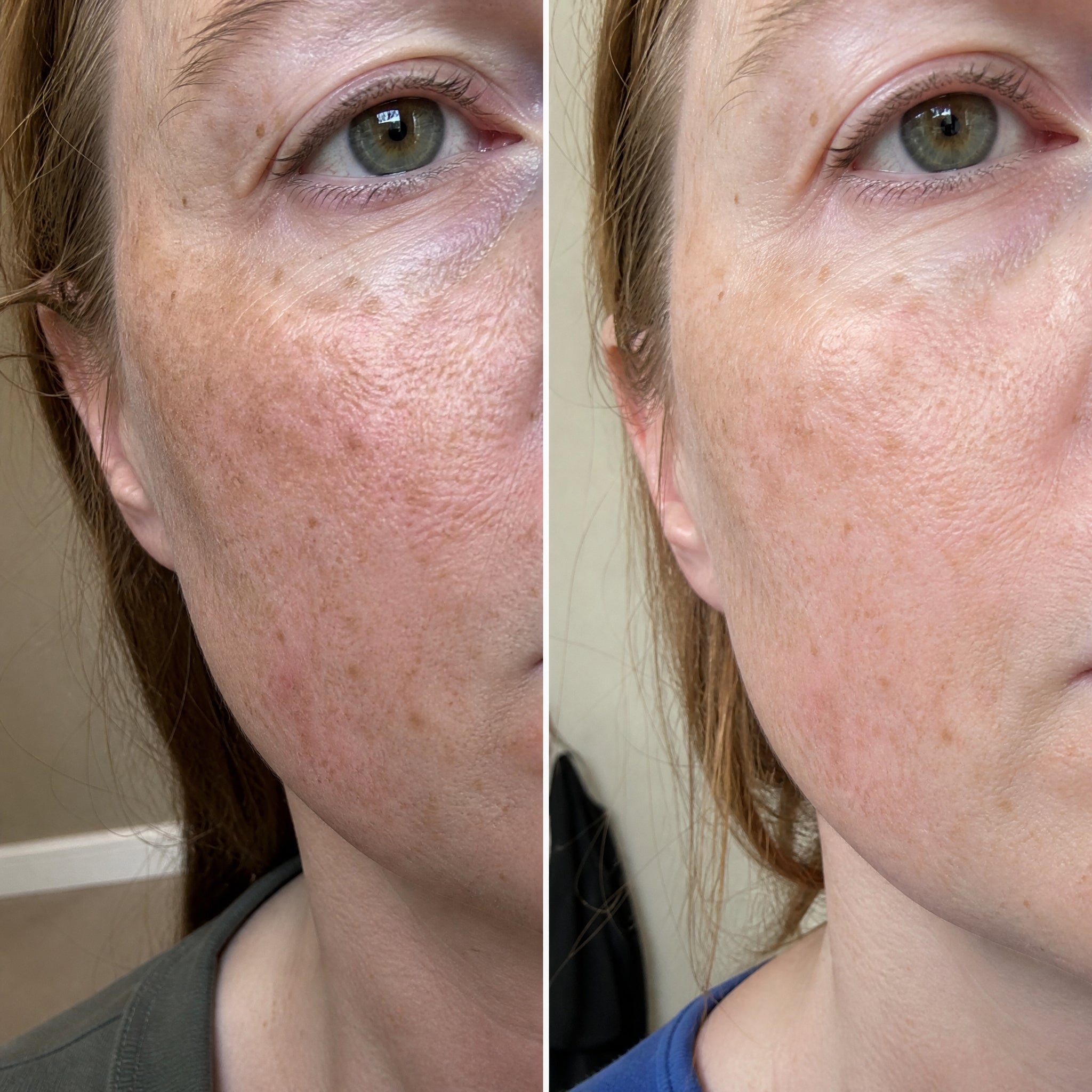
Before
After
Measurable benefits for the appearance of skin tone
Supported by a 2025 systematic review of topical glutathione
An independent 2025 systematic review evaluated the clinical evidence for topical glutathione in dermatology.
Review scope: Systematic review of published clinical trials of topical glutathione formulations.
Conclusions:
- Measurable benefits for the appearance of skin tone across the reviewed topical trials
- Favourable safety and tolerability for topical use
Khanna R, Rambhia P, Chapas A (2025). Journal of Clinical and Aesthetic Dermatology. View on PubMed
Published References
Skin-condition-improving and even-tone effects of topical oxidized glutathione (GSSG)
Watanabe F et al., 2014 · Clinical, Cosmetic and Investigational Dermatology · 7:267-274
Efficacy of a topical 2% S-acyl glutathione cream against UVB-induced erythema
Grandi V et al., 2019 · Giornale Italiano di Dermatologia e Venereologia · 154(6):632-637
Combination of topical and oral glutathione for a more even complexion: a double-blind randomized controlled trial
Wahab S et al., 2021 · International Journal of Dermatology · 60(8):1013-1018
Systematic Review of the Efficacy and Safety of Topical Glutathione in Dermatology
Khanna R, Rambhia P, Chapas A, 2025 · Journal of Clinical and Aesthetic Dermatology
Glutathione in dermatology: a systematic review
Sarkar R et al., 2025 · International Journal of Dermatology · 64(6):992-1004
Frequently Asked Questions
Everything you need to know about topical glutathione.
What is glutathione?
Glutathione is a tripeptide (three amino acids: glutamic acid, cysteine, and glycine) naturally produced by every cell in the body. It is one of the body's most important antioxidants, helping to neutralise free radicals. In skincare, topical glutathione is valued for supporting a brighter, more even-looking complexion.
How does glutathione support a brighter-looking complexion?
As a powerful antioxidant, glutathione helps defend the skin against oxidative stress - one of the factors behind a dull, tired-looking and uneven complexion. With consistent use, glutathione-based skincare is associated with a brighter, fresher and more even-looking skin tone and a natural, radiant glow over time.
Can glutathione be absorbed topically?
Yes. While oral glutathione has bioavailability challenges, topical formulations deliver glutathione directly to the skin. Studies using both reduced (GSH) and oxidised (GSSG) forms of topical glutathione have reported visible improvements in the evenness of skin tone and overall skin condition. Formulation stability is key - glutathione must be properly stabilised to remain active in skincare products.
Is topical glutathione safe?
Topical glutathione has an excellent safety profile. Published clinical trials report no significant adverse effects from topical application. It is non-irritating and suitable for all skin types, including sensitive skin. As a naturally occurring substance in the body, it is inherently biocompatible.
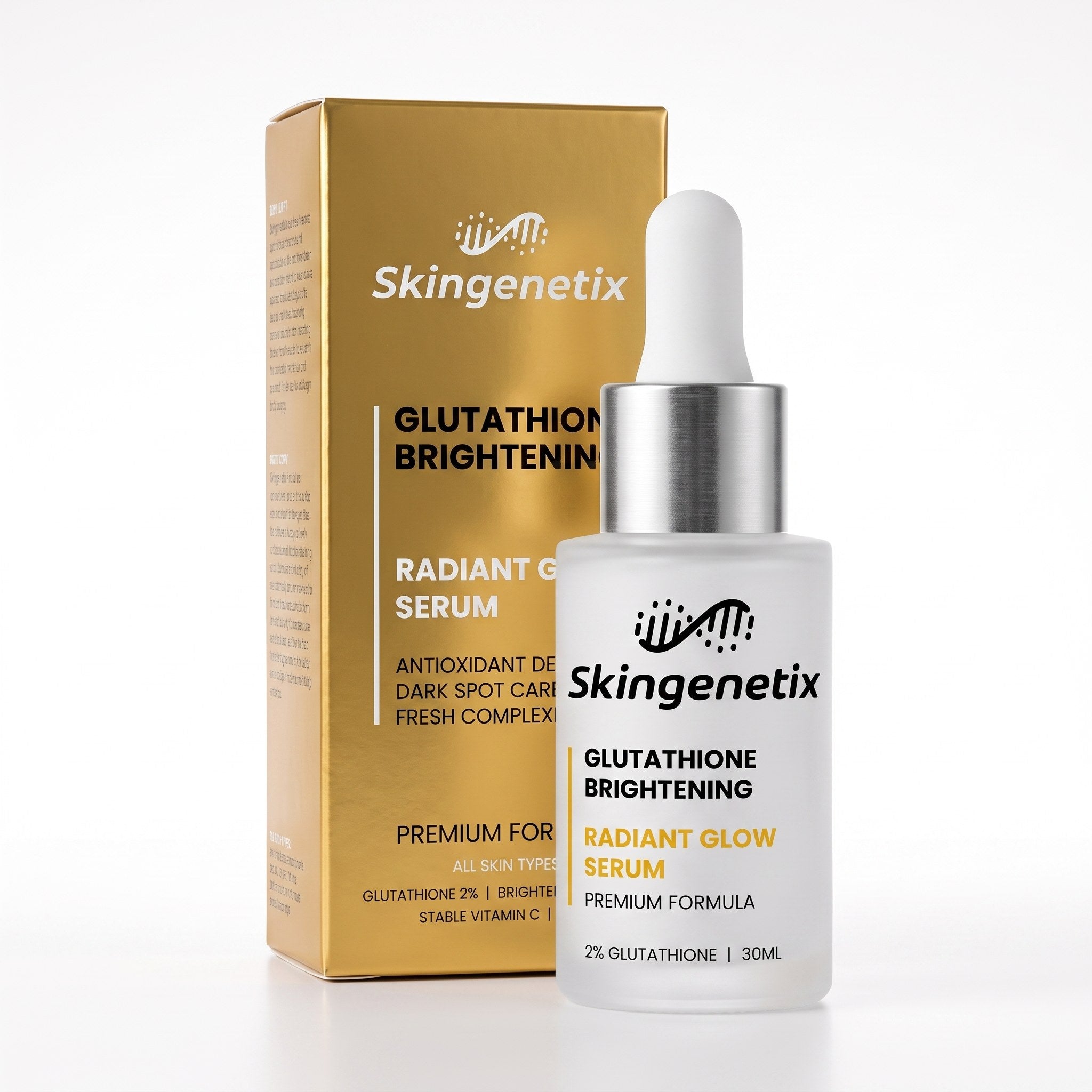
Shop Glutathione Products
Explore More Research

Copper Peptide (GHK-Cu)
Supports the skin's collagen and renewal pathways
Acetyl Hexapeptide-8
Helps soften the look of expression lines
Matrixyl 3000
A clinically studied peptide for smoother-looking skin

PDRN
A skin-conditioning ingredient for firmer, revitalised-looking skin
Explore Our Glutathione Formulations
Harness the power of the body's master antioxidant for brighter, more resilient skin.