
Scientific Research
Every ingredient in Skingenetix is supported by peer-reviewed studies published in dermatology and cosmetic science journals. All referenced research is publicly accessible.
Clinically Studied Active Ingredients
Each ingredient is selected based on published peer-reviewed research

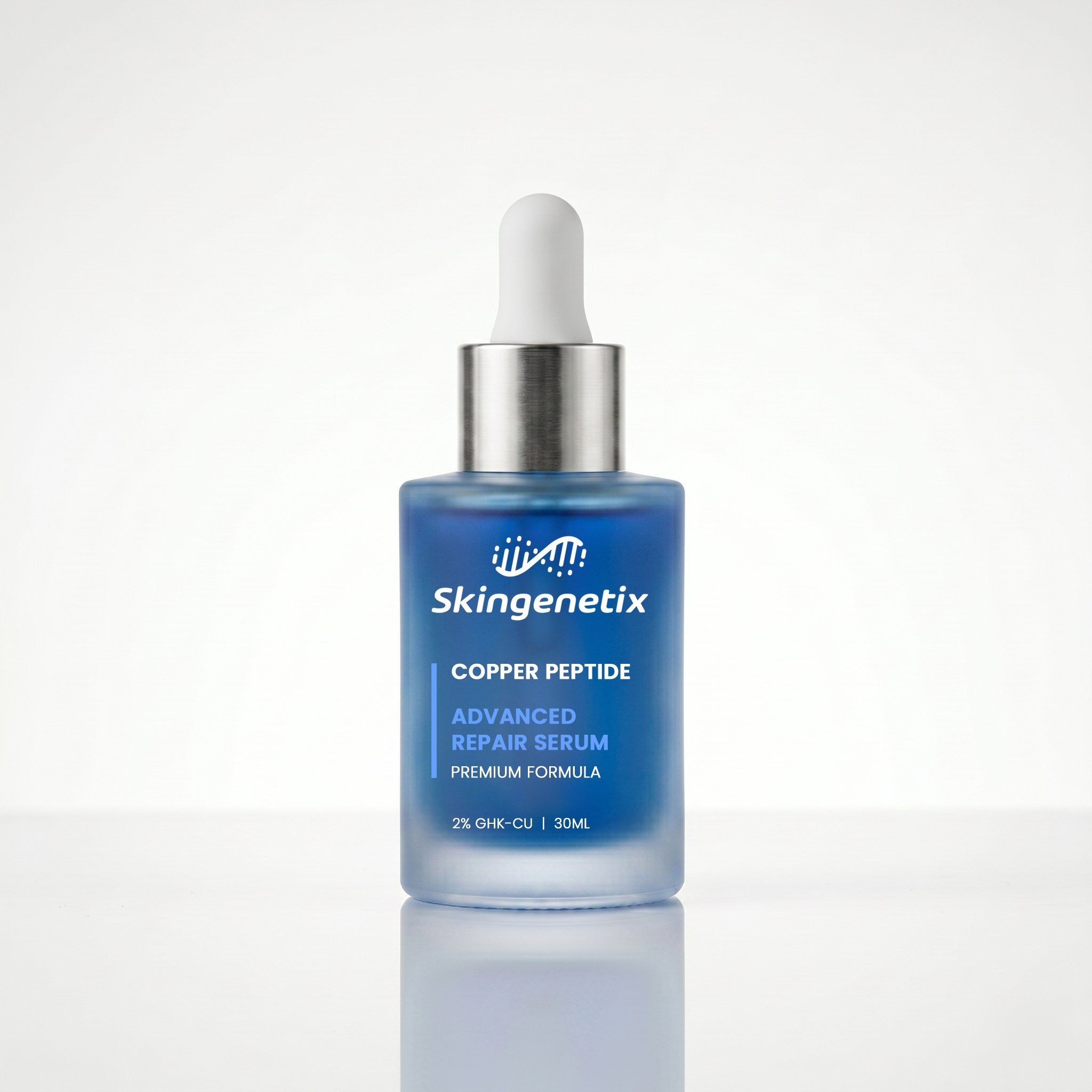
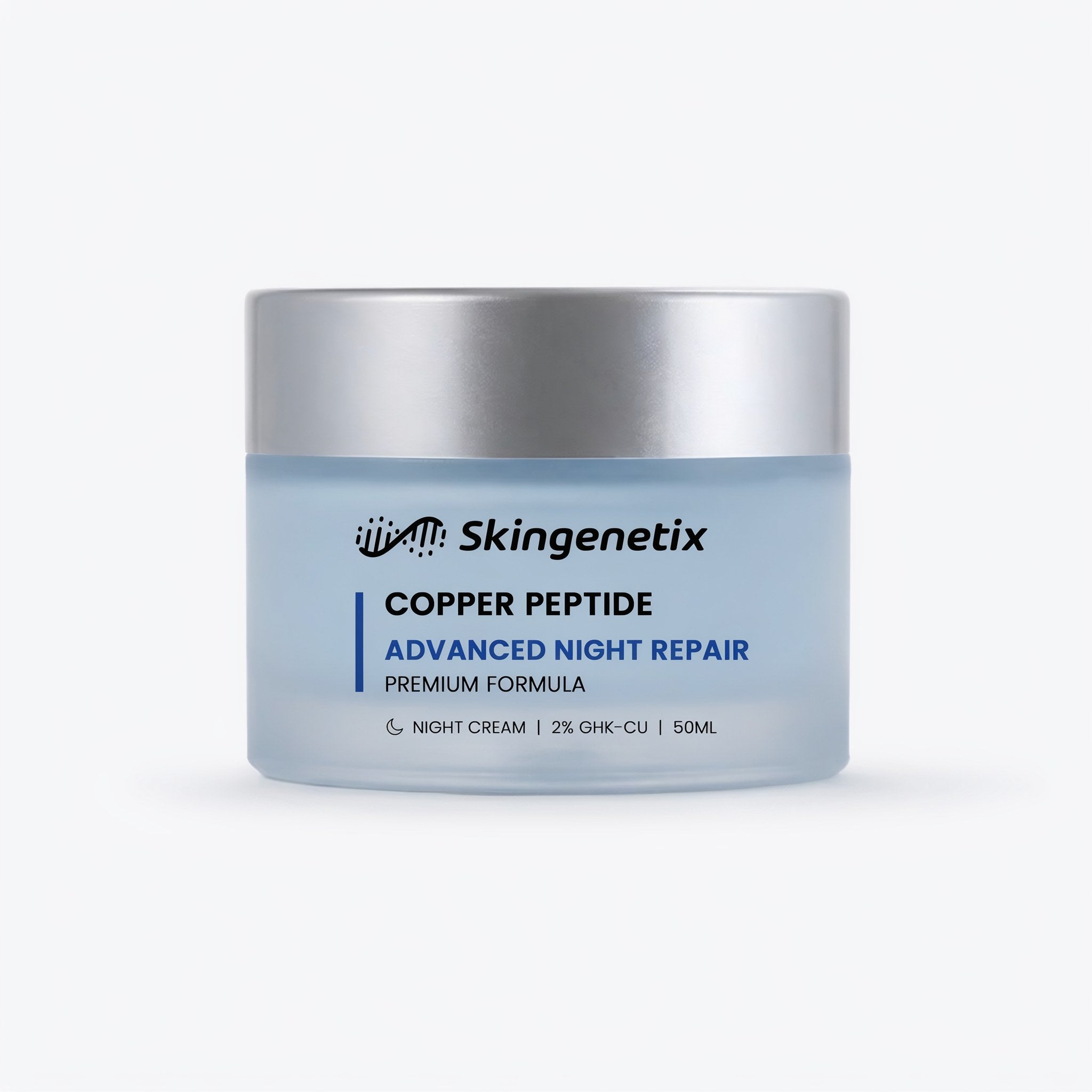
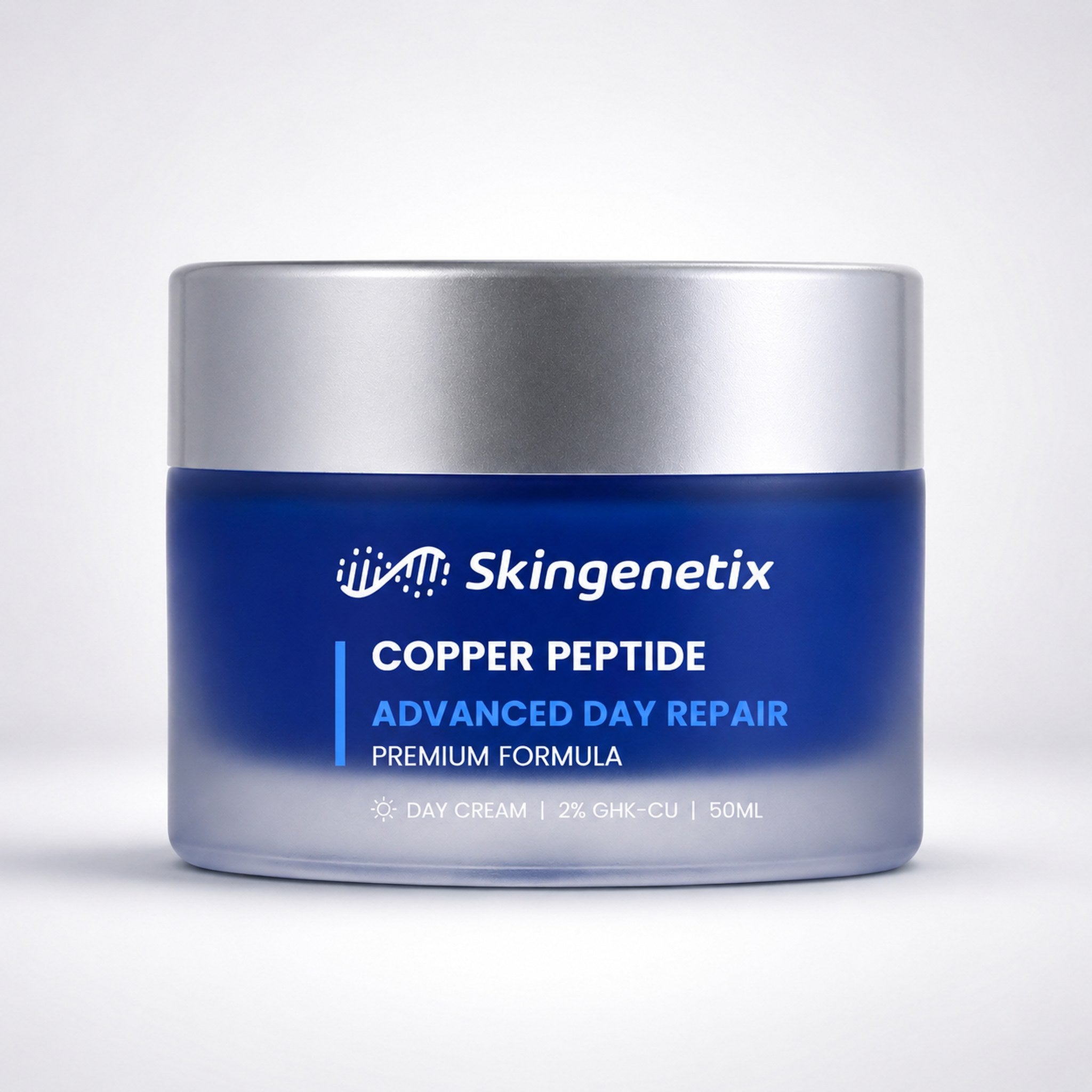
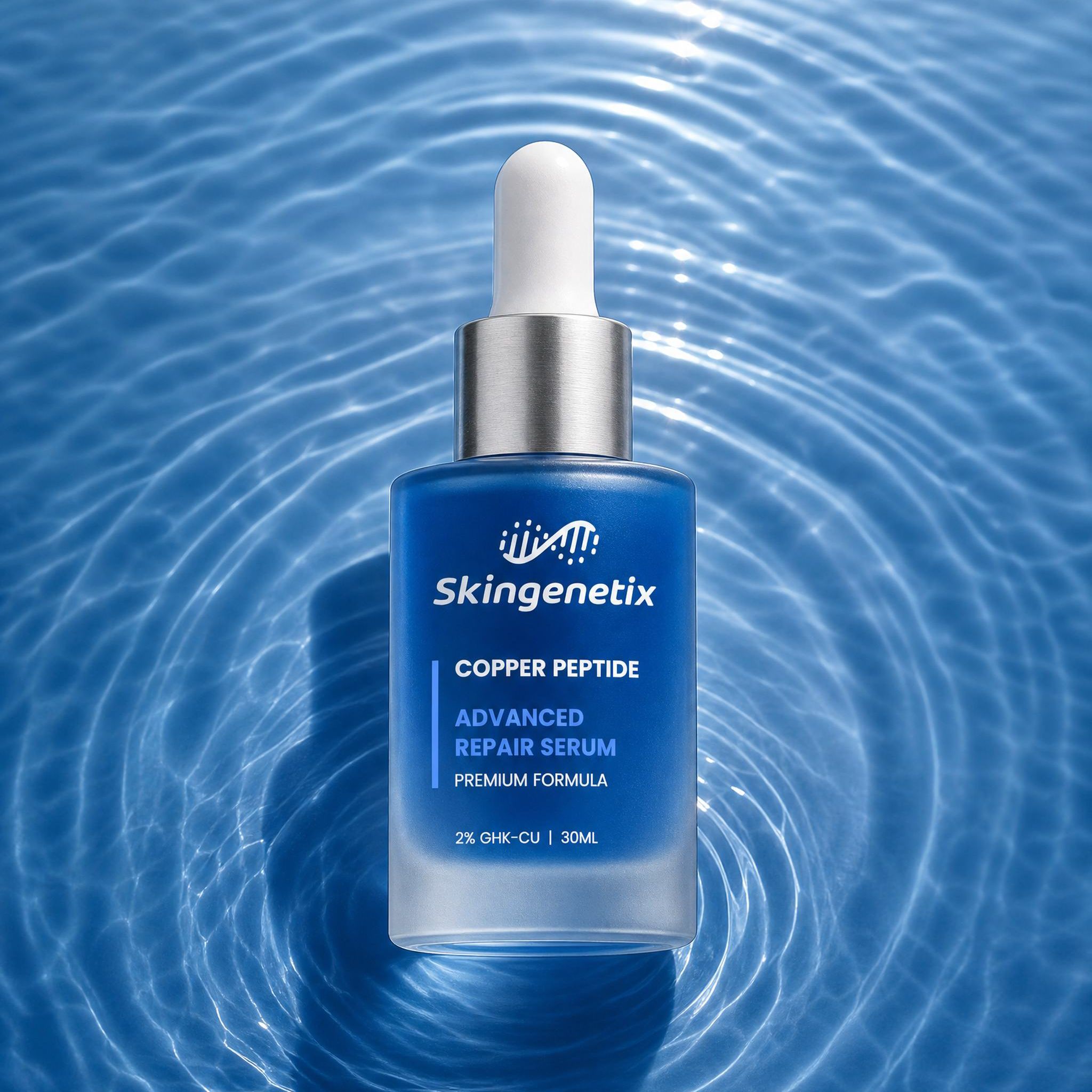
Copper Peptide GHK-Cu
Supports the appearance of firmer, smoother skin. One of the most-studied peptides in skin science, with over 50 published studies.

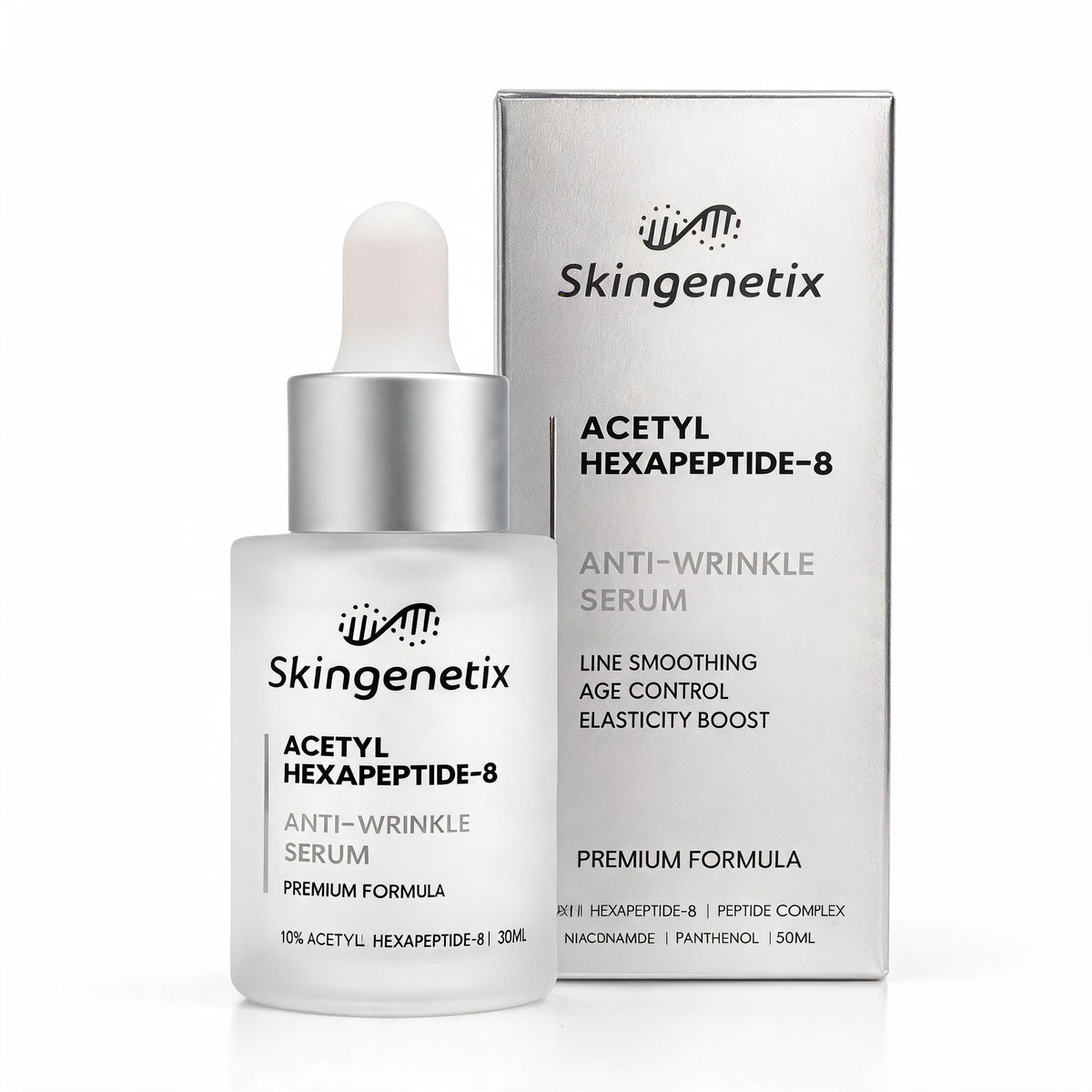
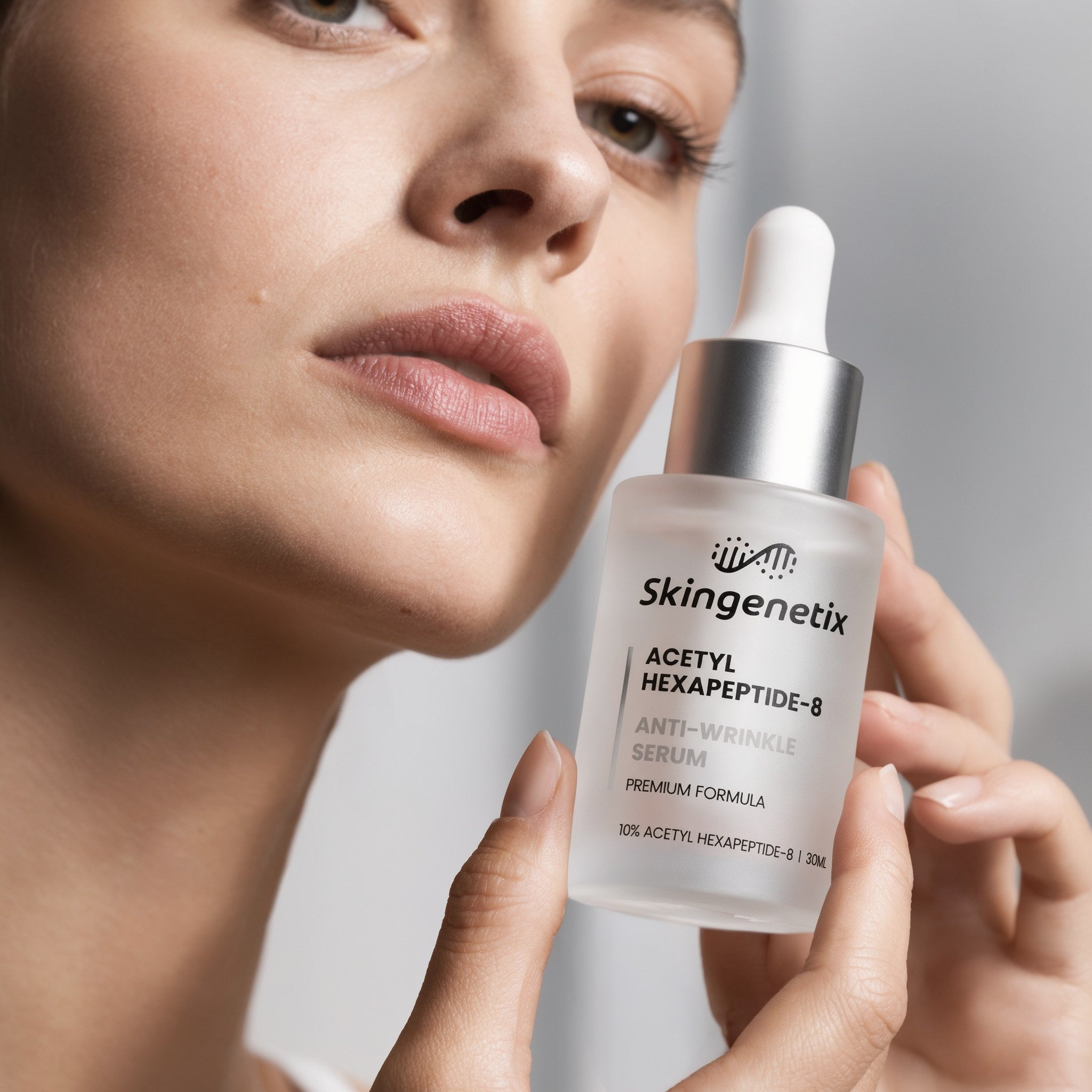
Acetyl Hexapeptide-8
Helps visibly relax the look of expression lines. In a randomized trial, 48.9% overall anti-wrinkle efficacy versus placebo (Wang 2013).

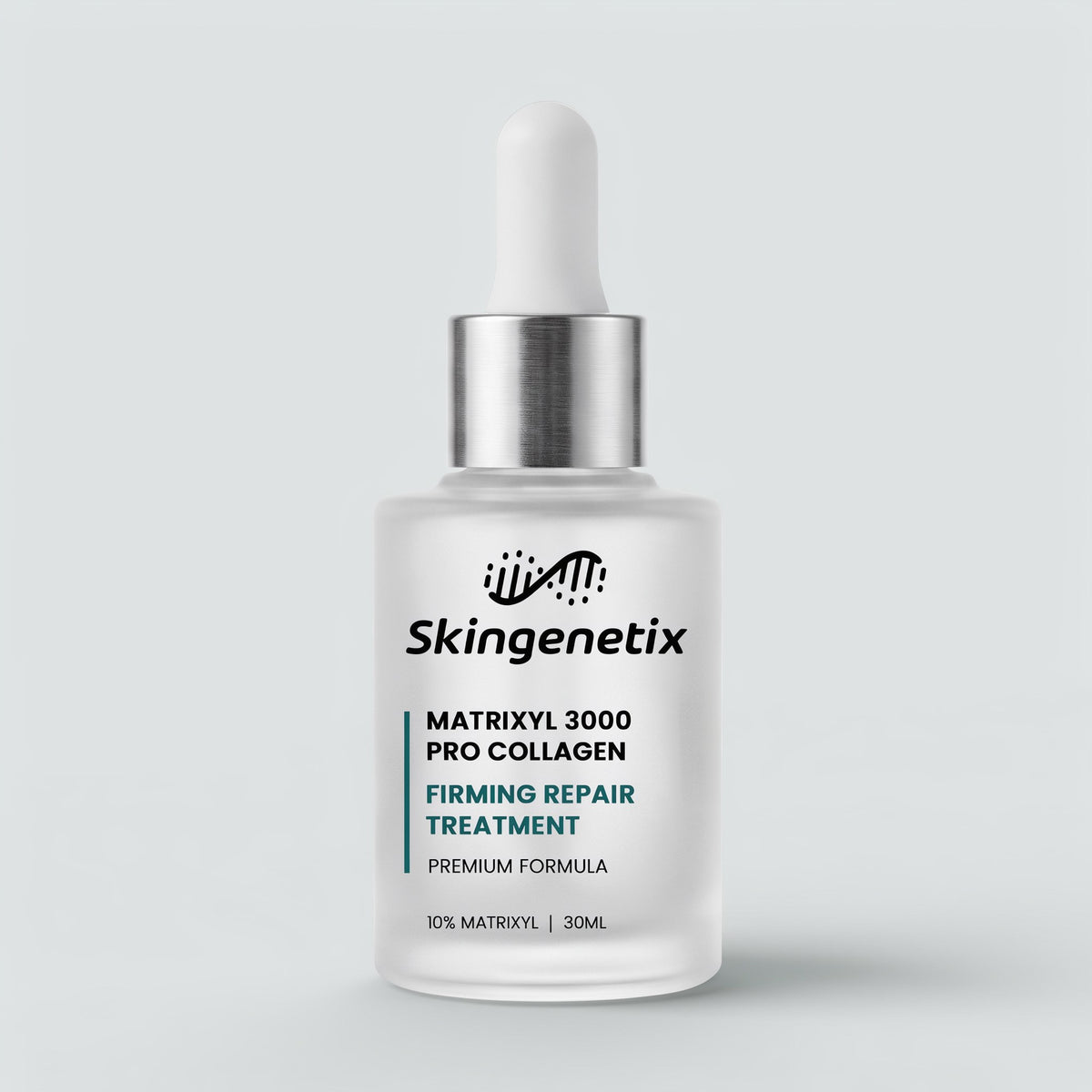
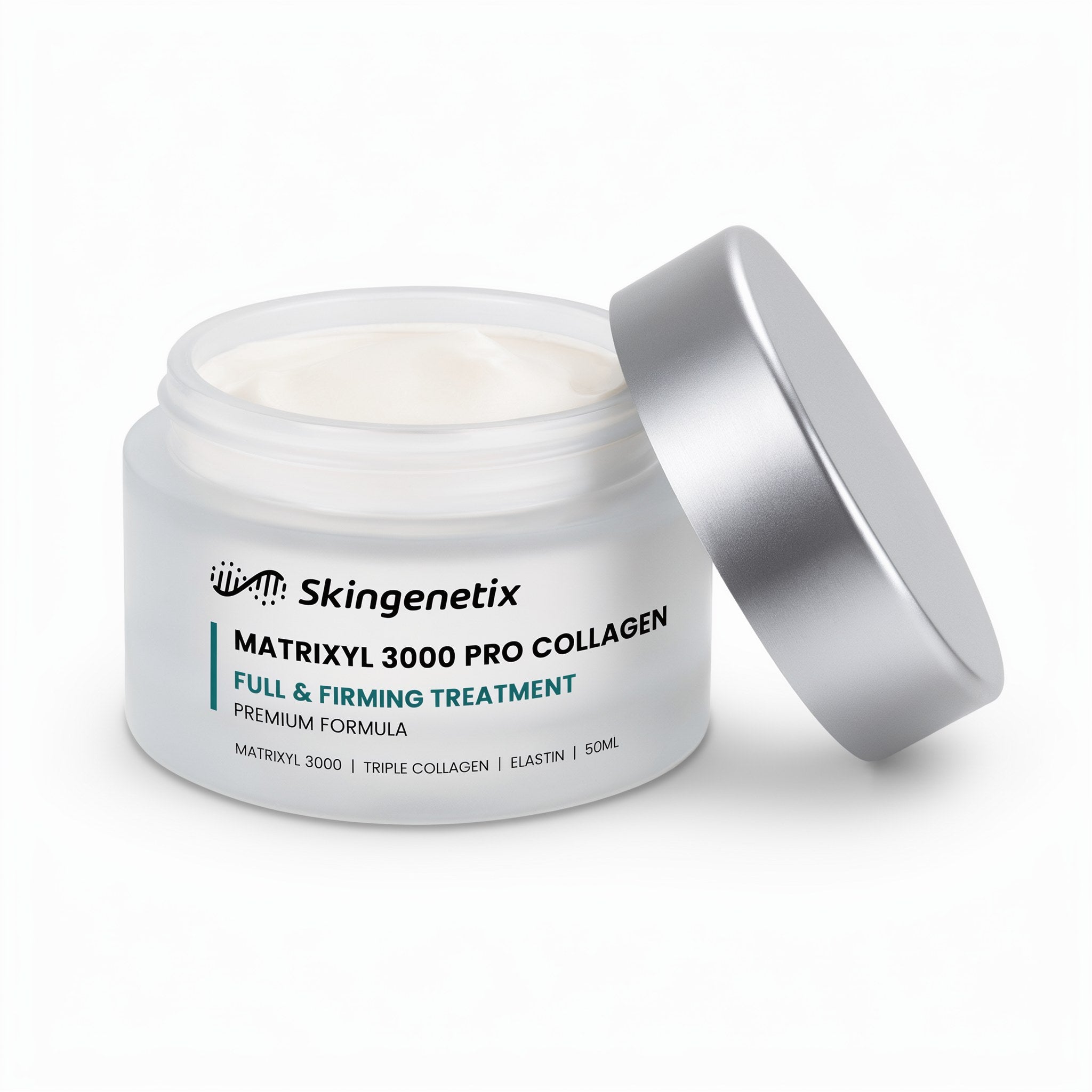
Matrixyl 3000
A dual matrikine-peptide duo associated with the skin's natural collagen activity, for firmer, smoother-looking skin. Supported by collagen findings in laboratory (in-vitro) tests.

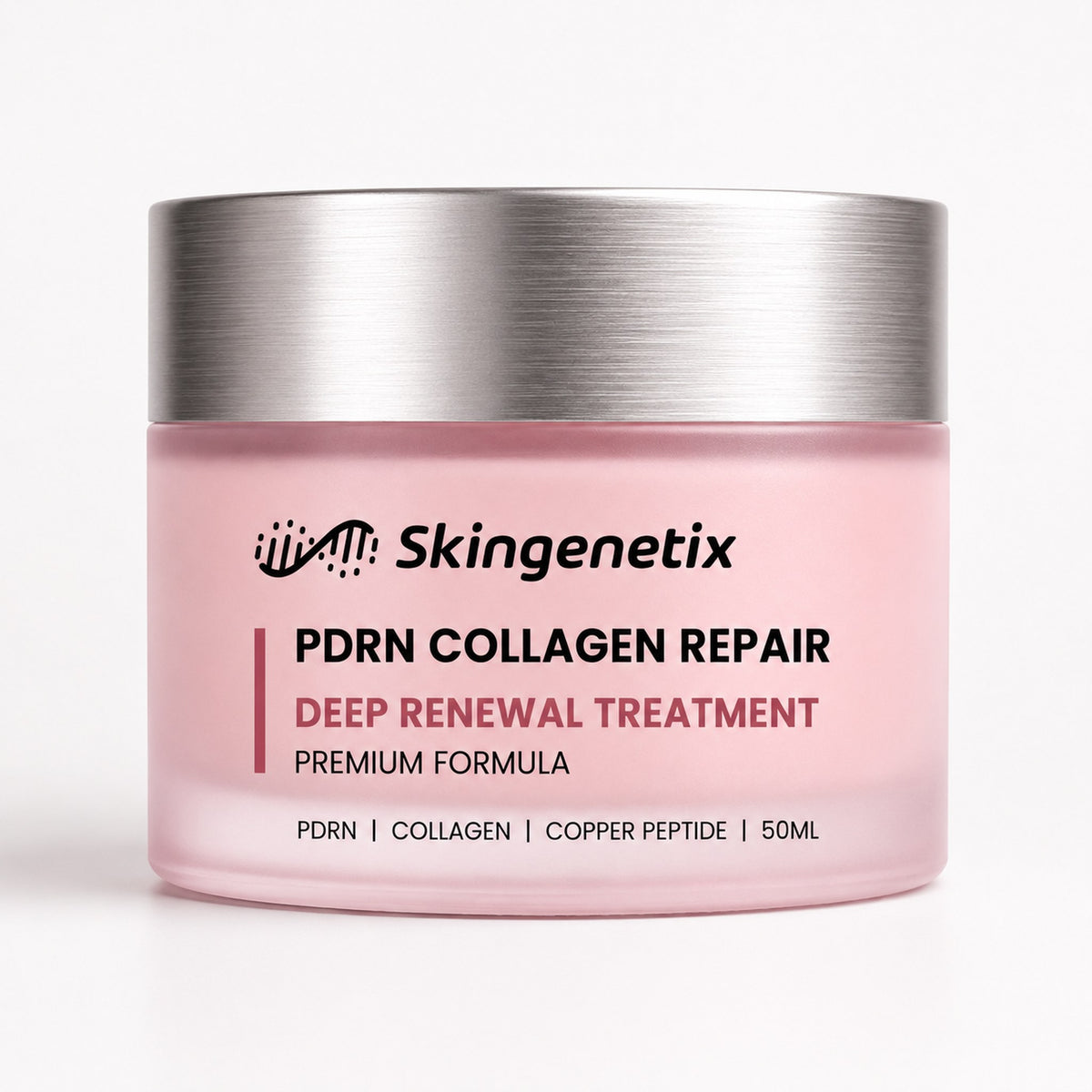
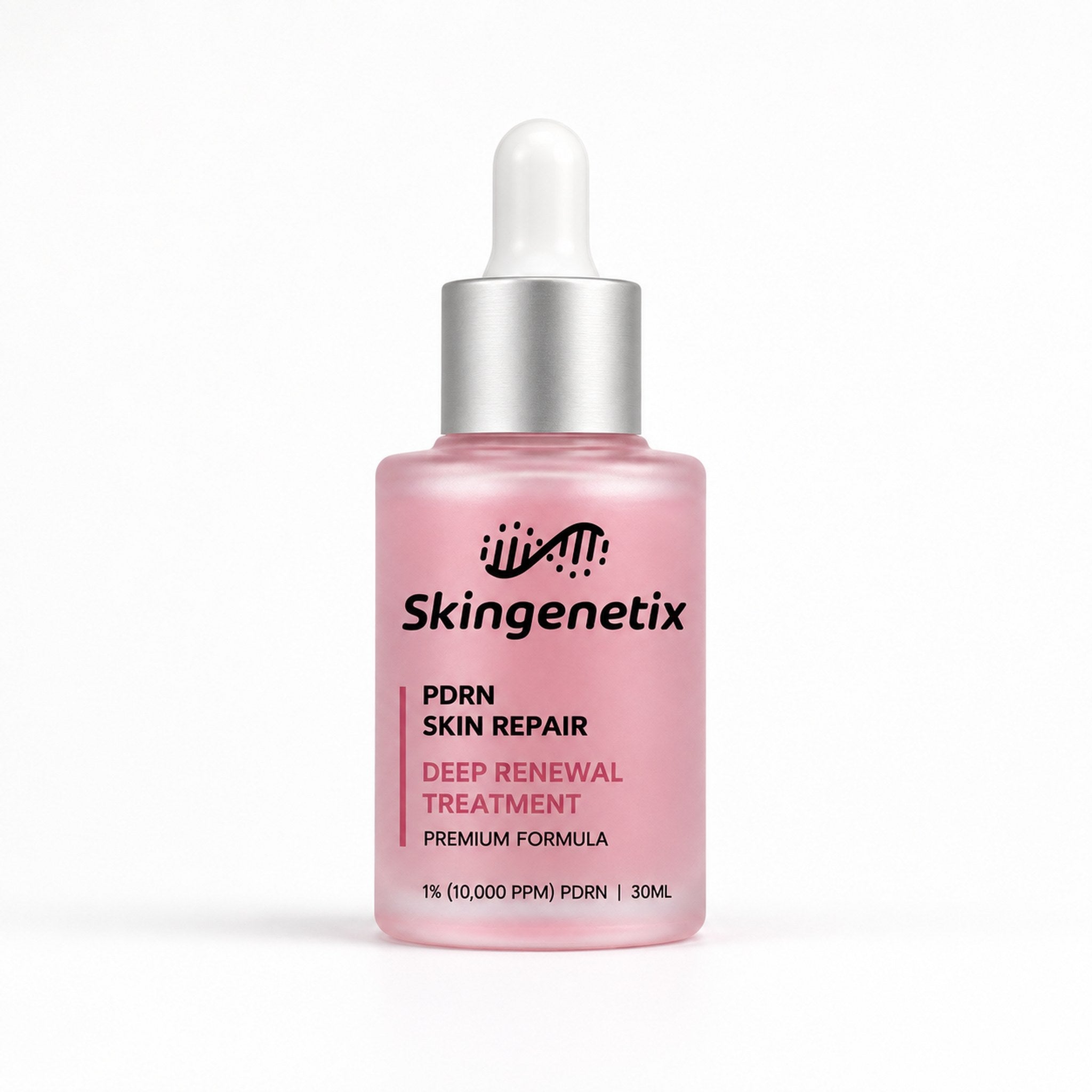
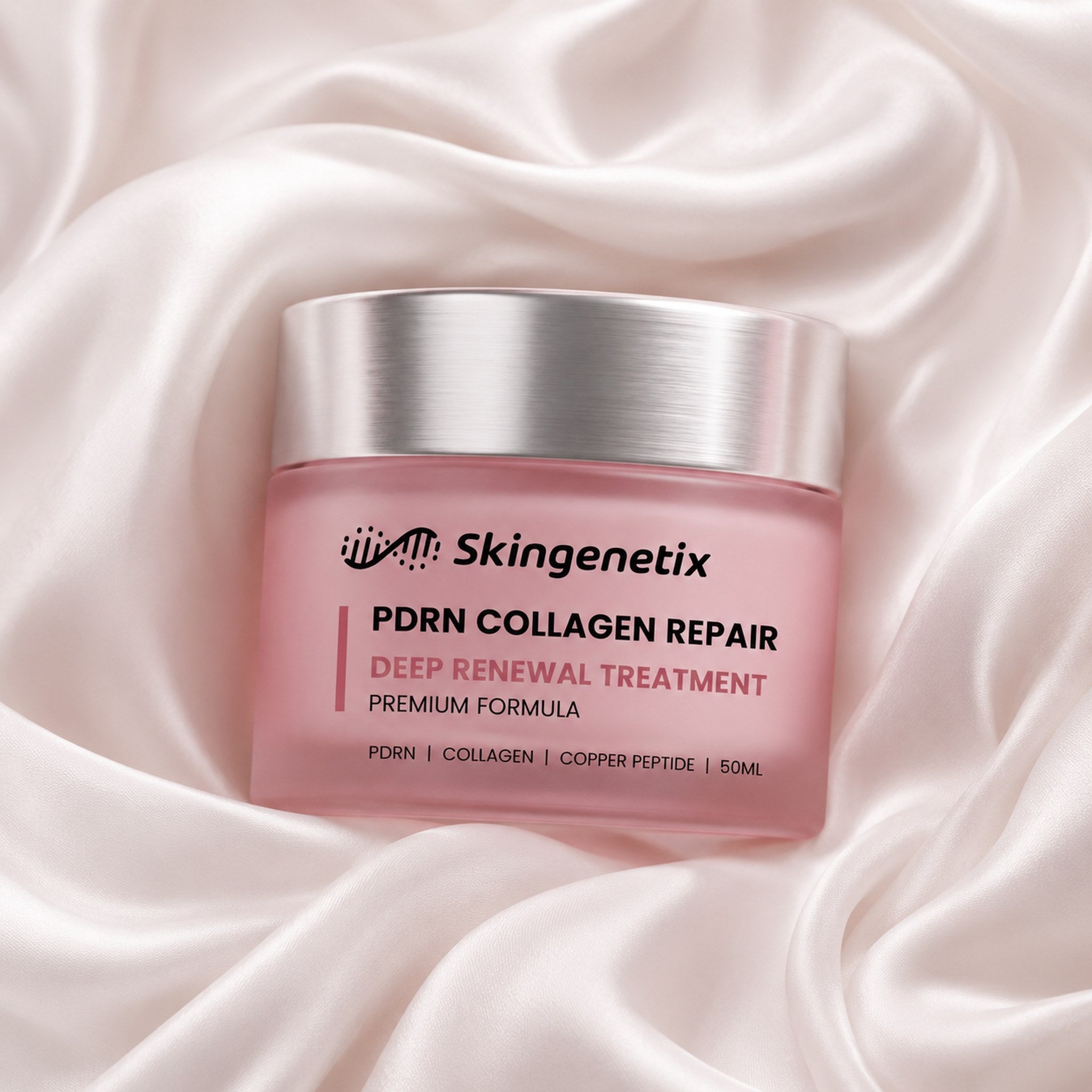
PDRN
Salmon-derived polynucleotides (INCI: Sodium DNA) valued for a firmer, smoother and more revitalised-looking complexion.

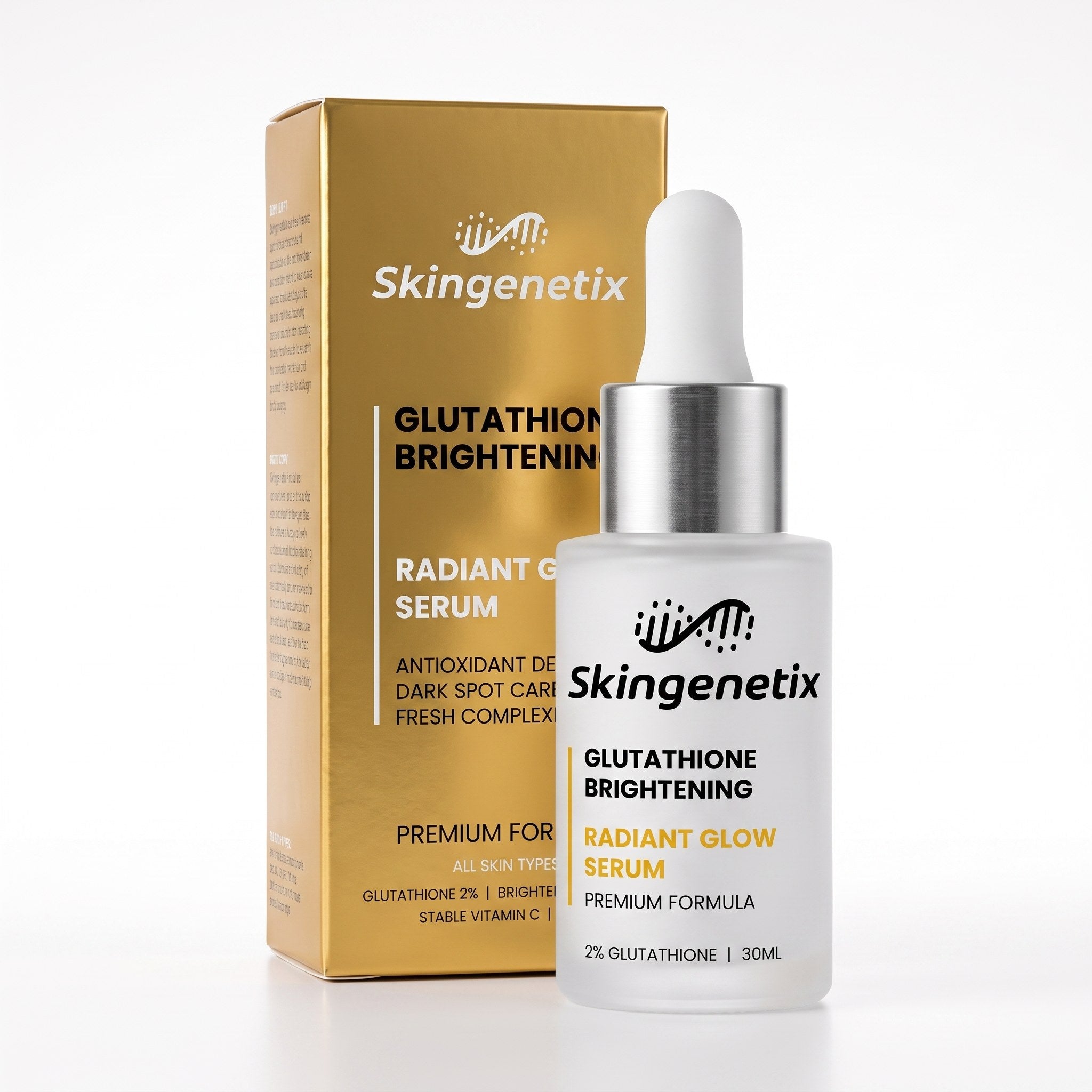
Glutathione
The body's master antioxidant. Helps neutralise free radicals and supports a brighter, more even-looking skin tone and radiance.

How We Work
We do not commission our own clinical studies. All research we reference is independent, peer-reviewed, and publicly accessible via PubMed or scientific journal databases.
Topical peptide delivery remains an active area of research. We reference studies conducted at cosmetically relevant concentrations and clearly distinguish between laboratory (in-vitro) conditions and human trials (in-vivo).
Frequently Asked Questions
We reference peer-reviewed clinical studies published in dermatology and cosmetic science journals such as the International Journal of Cosmetic Science, BioMed Research International, and the International Journal of Molecular Sciences. All cited studies are publicly accessible via PubMed. We do not count in-house consumer perception surveys or unverified ingredient supplier marketing claims as evidence.
Individual results vary based on skin type, age, existing skin condition, and consistency of use. The clinical studies we reference show statistically significant results across study populations, but no skincare product can guarantee identical results for every individual. We present the research transparently so you can make an informed decision.
Every study referenced on our research pages includes a direct link to the publication on PubMed or the relevant journal website. Links open in a new tab. PubMed is a free, publicly accessible database maintained by the U.S. National Library of Medicine containing over 36 million biomedical citations.
Because concentration determines whether an ingredient is effective or cosmetic decoration. A peptide at 0.01% may appear on an ingredient list but deliver no measurable benefit. We publish exact percentages so you can compare our formulations directly against the concentrations used in published clinical trials.
Each active ingredient in our formulations supports the skin in a different way. GHK-Cu supports the appearance of firmness and elasticity. Matrixyl 3000 uses matrikine peptide signals associated with the skin's collagen activity. Acetyl Hexapeptide-8 helps visibly relax the look of expression lines. PDRN supports a firmer, more revitalised-looking complexion. Glutathione acts as a powerful antioxidant, helping neutralise free radicals and supporting a brighter, more even-looking skin tone. Together, this multi-active approach targets the visible signs of aging from several angles at once.
Experience the Research
Every product formulated at clinically validated concentrations