


Microneedling Pen at Home: How to Use One on Your Face, and Pen vs Stamp
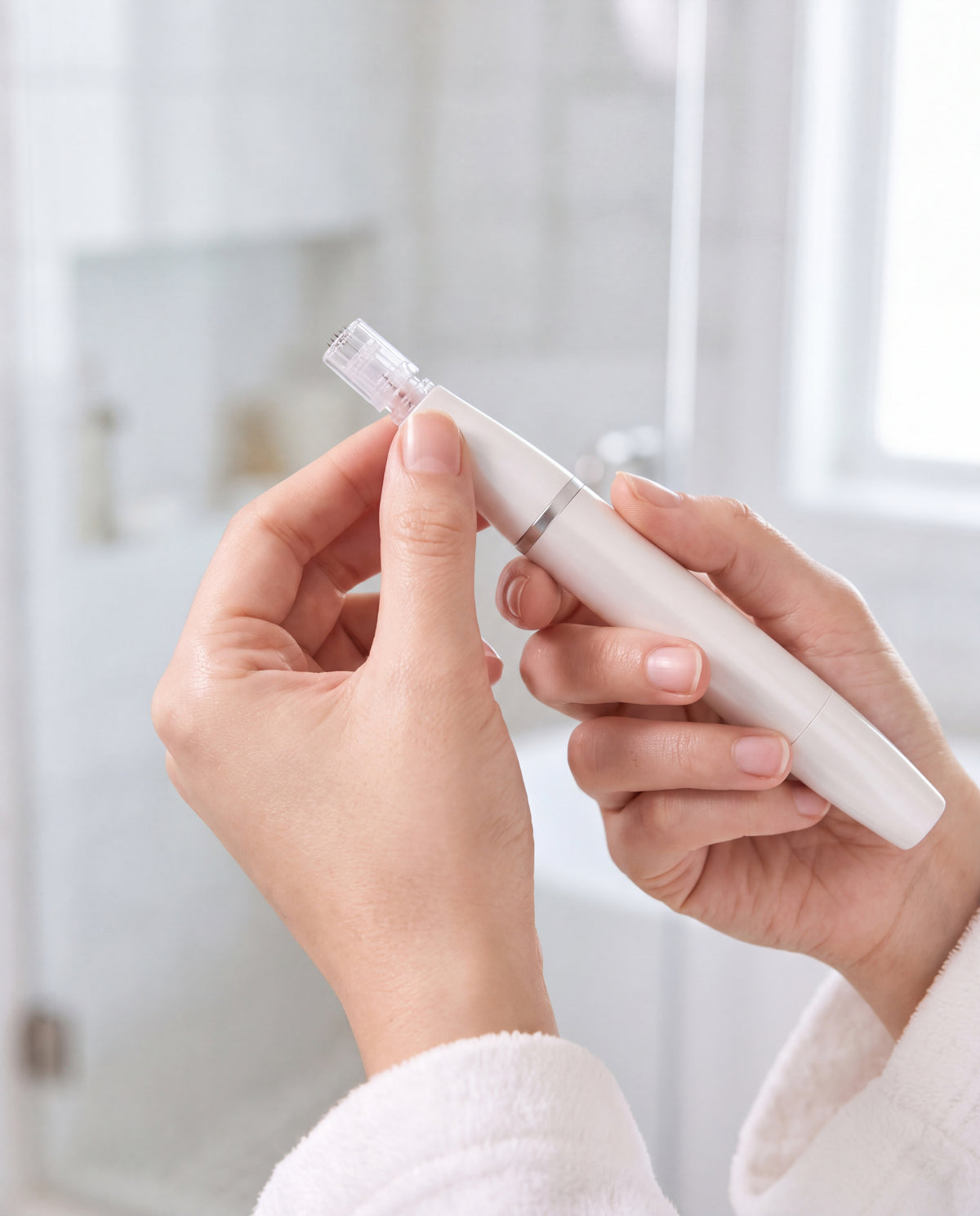
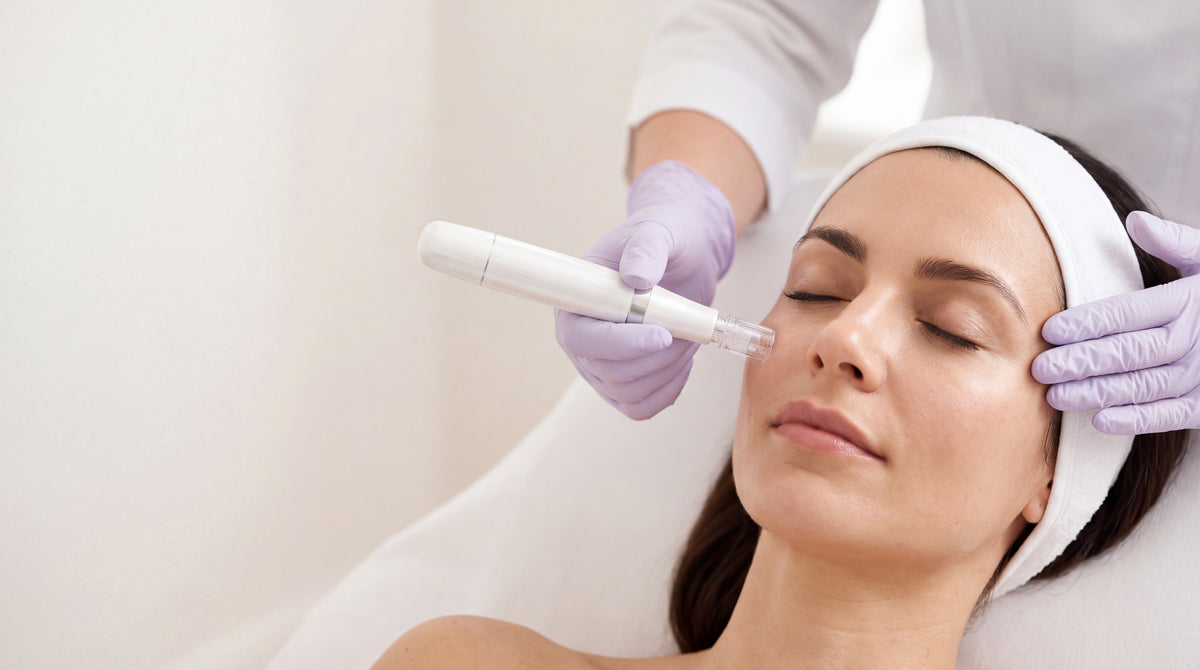
A microneedling pen at home is a motorised device whose replaceable needle cartridge moves up and down to make tiny channels in the skin, with the depth set on the pen. On the face, dermatology sources describe shallow settings of 0.5 mm or less and a new sterile cartridge every session.
By the Skingenetix Research Team, medically reviewed by Dr Esther Bodde, 19 November 2026
48 to 72 hours
the skin’s barrier recovered
Small randomised split-face study of 16 people; ordinary 0.25 and 0.5 mm microneedles (Tao 2017).
about 40%
lowered facial wrinkle scores
Controlled trial with a 0.5 mm roller, applied by clinicians (Liang 2022).
83%
were satisfied with facial microneedling
Systematic review and meta-analysis of 21 studies and 723 people (Foppiani 2025).
In short:
- What depth? Up to 0.5 mm at home, starting lower while you learn. Clinics go deeper, up to about 2.5 mm.
- How often? Every two weeks at depths up to 0.5 mm, after any redness has gone. Deeper settings need longer gaps.
- Pen or stamp? A pen sets depth on the device; a stamp is simpler. The table below adds a roller.
Our microneedling guide covers the basics. The Skingenetix microneedling pen is coming soon.
What is a derma pen, and how does it work?
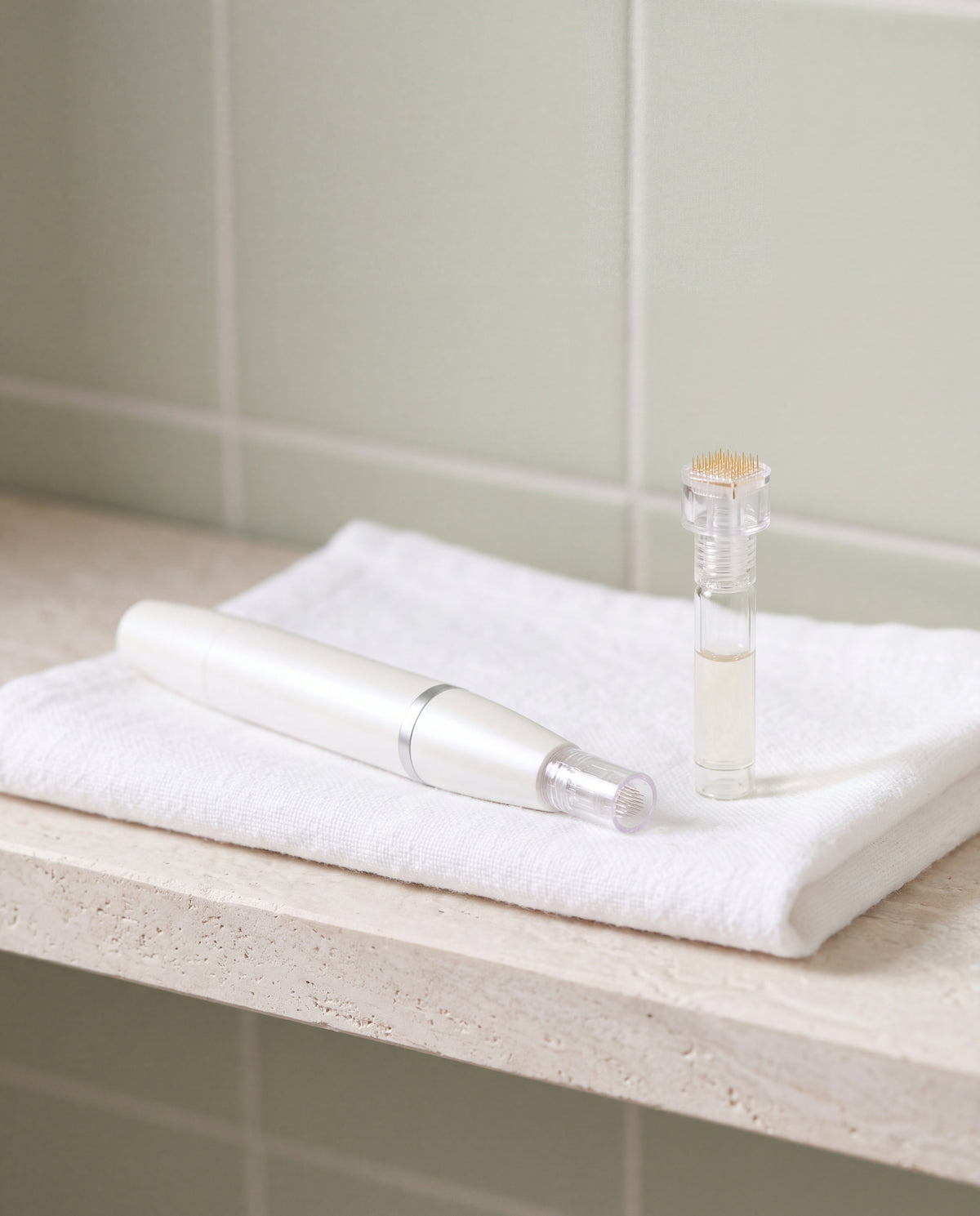
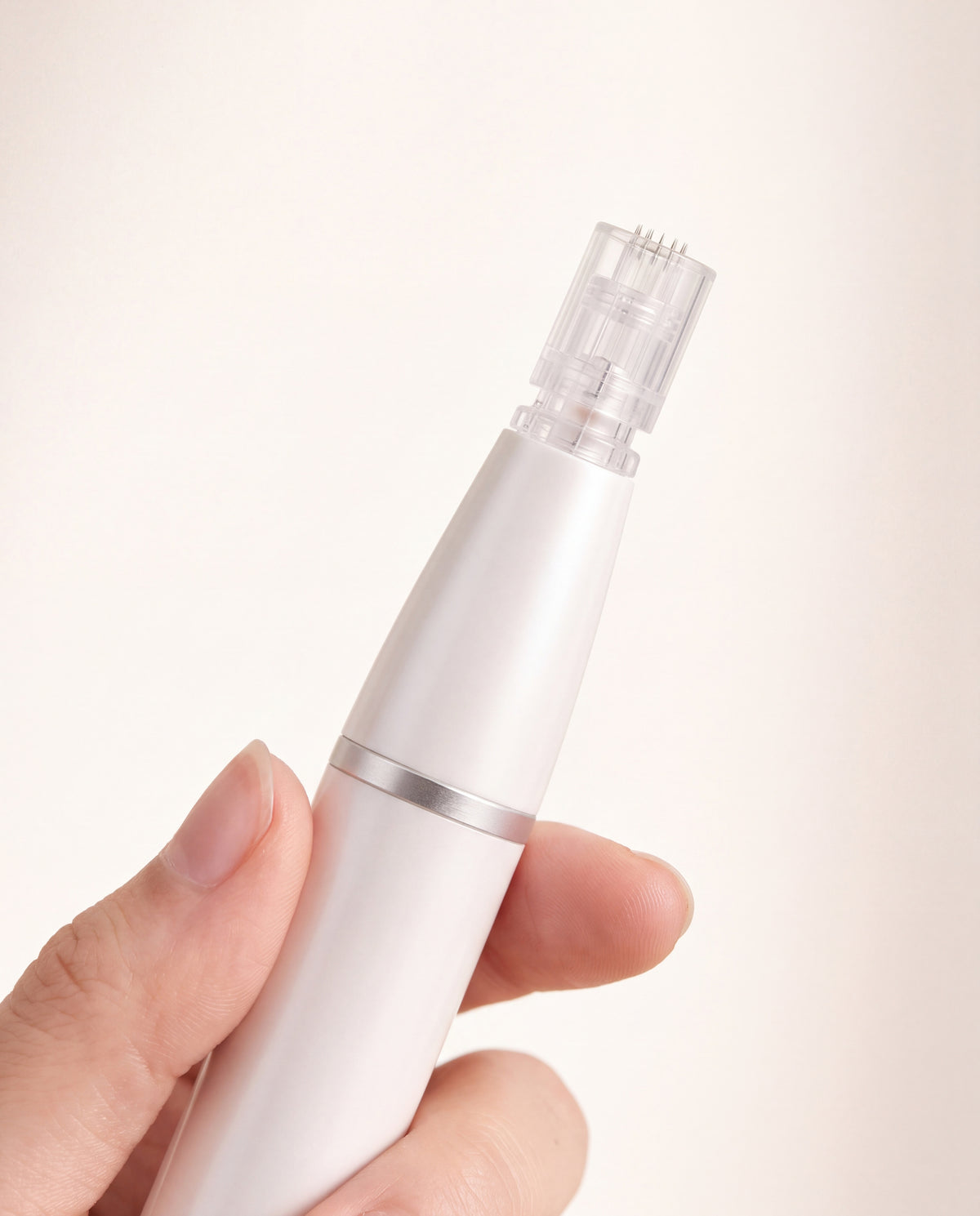
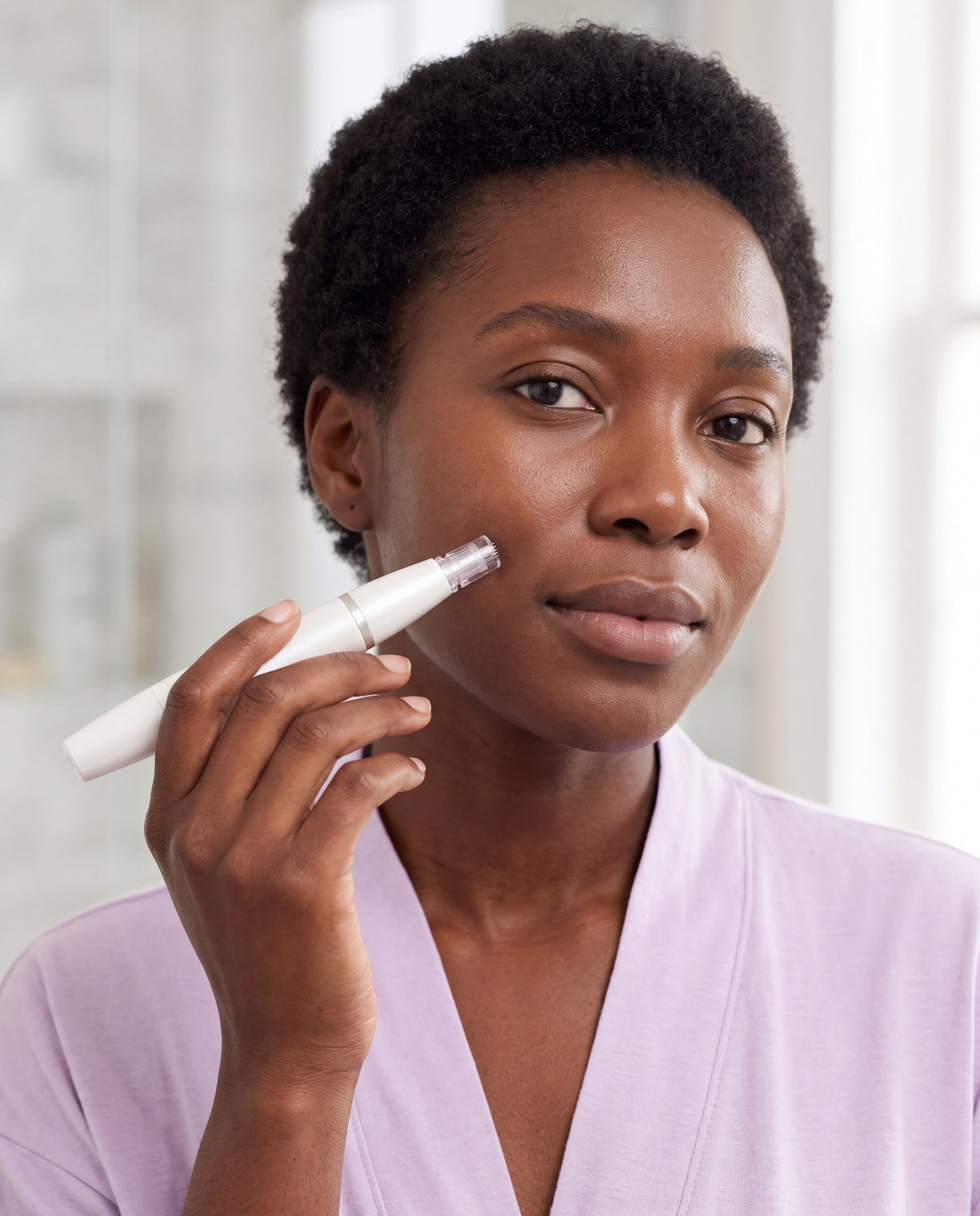
A derma pen, also sold as a microneedling pen, an electric microneedling device or a microneedling machine, is a hand-held tool whose small tip carries a cluster of fine needles. A motor drives them up and down, so each pass makes many tiny punctures (Cleveland Clinic).
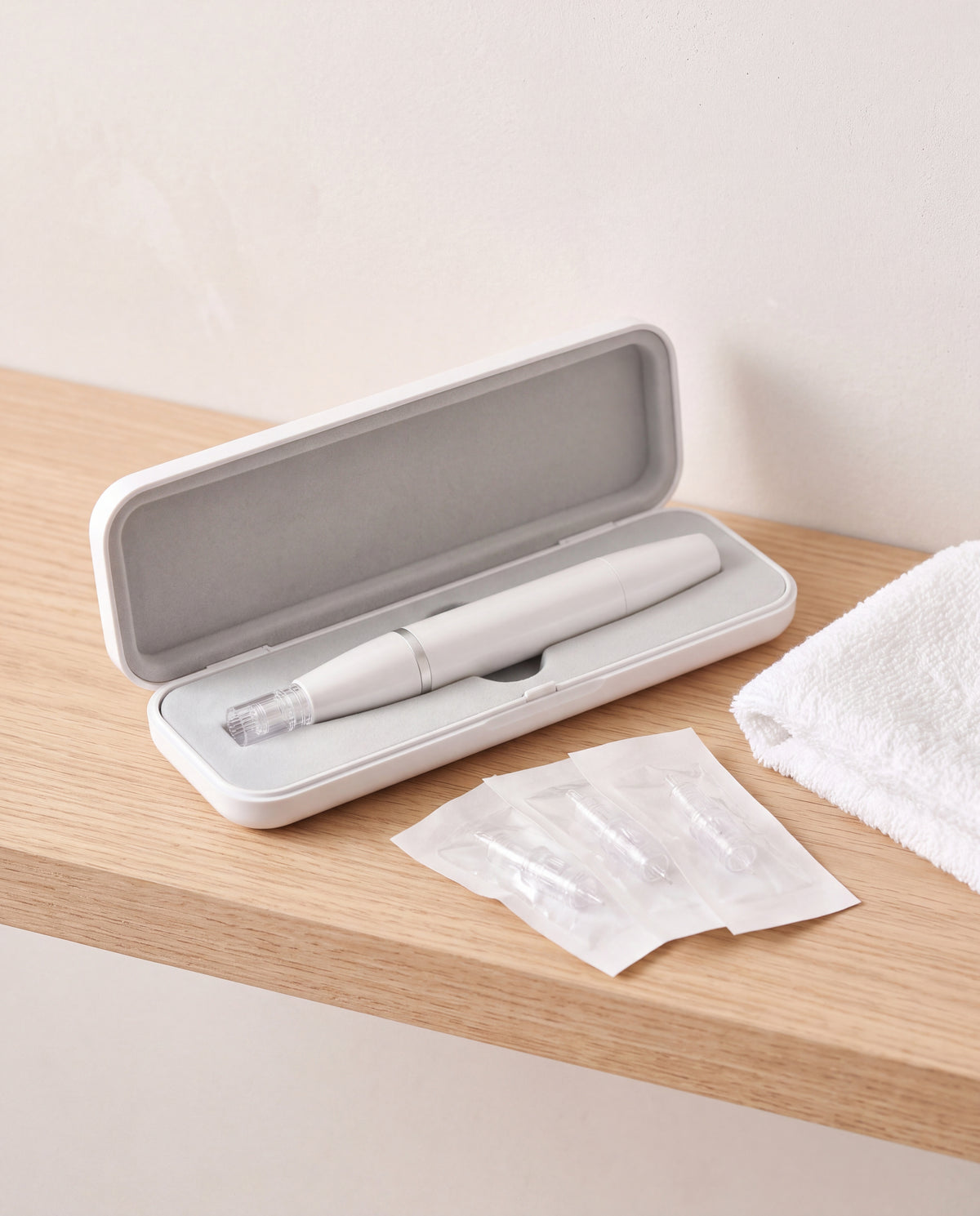
Three parts matter. The cartridge holds the needles and is disposable. The depth setting, a dial or adjustable guide, decides how far they extend. The speed setting changes the punctures a minute.
Derma pen vs derma stamp: which is better for the face?
Neither wins on every point.
| Compare | Pen | Stamp | Roller |
|---|---|---|---|
| How the needles move | A motor drives them up and down as you glide. | You press straight down, lift, move on. | Drum needles enter as you roll. Depth follows pressure. |
| Typical home depth | Set on the device. Home guidance cites about 0.25 mm. | Fixed by the head. Our sets use 0.5 mm. | Under 0.15 to about 0.25 mm in the sources below. |
| Coverage | Continuous glide. The small tip suits narrow areas such as the nose. | One small patch at a time. Suits an isolated line. | Wide drum covers broad areas such as the cheeks. |
| What you replace | A new cartridge each session. | A new single-use head each session. | Nothing, so cleaning matters and needles dull. |
| Cost per session | Device once, plus a cartridge a session. Prices vary. | EUR 17.25 (Copper Peptide, EUR 69 for 4) or EUR 22.25 (PDRN, EUR 89 for 4), serum vials included. | One purchase. |
| Who it suits | Those who want to choose depth and will buy cartridges. | First-timers who want a fixed depth. | Those who want shallow, low-cost rolling. |
How we built this table: depths and how each device moves come from Singh and Yadav 2016, Cleveland Clinic, NBC Select 2025 and our product pages, and stamp cost per session from our own prices. The pen and roller cost cells and the who-it-suits row are our own judgement, and the pen and roller columns describe those devices in general. For clinic against home costs over equal sessions, see our microneedling cost guide.
If you would rather start with a stamp, see our microneedling stamp collection. Each of our two sets comes with its own serum vials, and the directions are on each product page.
What depth should a microneedling pen be set to for the face?
- Home useup to 0.5 mm
- Clinic depths1 to 2.5 mm
- Up to 0.5 mm: home use. Home stamps and rollers, ours included, use 0.5 mm or less. Singh and Yadav 2016 (a narrative review, so no sample; no funding or conflicts declared) call needles up to 0.5 mm essentially painless and usually recommend 0.5 or 1.0 mm for ageing skin and wrinkles. Dermatologists quoted by NBC Select 2025 suggest starting at about 0.25 mm.
- 1 to 2.5 mm: clinic depths. Cleveland Clinic lists clinic lengths of 0.5 to 2 mm, and 1.5 to 2 mm is given for acne and other scars (Singh and Yadav 2016). One NBC Select dermatologist puts in-office needles at up to about 2.5 mm.
How do you use a microneedling pen at home, step by step?
Check your skin
Skip broken or irritated skin.
Cleanse and dry
Wash your hands and face, then dry both.
Fit a new cartridge
Use a sealed, sterile one, never a used one.
Start low
Begin at the lowest depth and speed.
Glide in short passes
Work one area at a time with light pressure.
Avoid the eyes and lips
Use the pen on the face only.
Stop at mild pink skin
Clinics aim for pinpoint bleeding (Singh and Yadav 2016). At home, stop at any bleeding.
Finish
Throw the cartridge away, clean the pen as its maker directs, and stay out of the sun until the skin heals (Cleveland Clinic). Our aftercare day-by-day guide covers timing for retinol, acids, make-up and sunscreen.
For the wider routine, see our at-home microneedling guide.
How often can you use a microneedling pen?
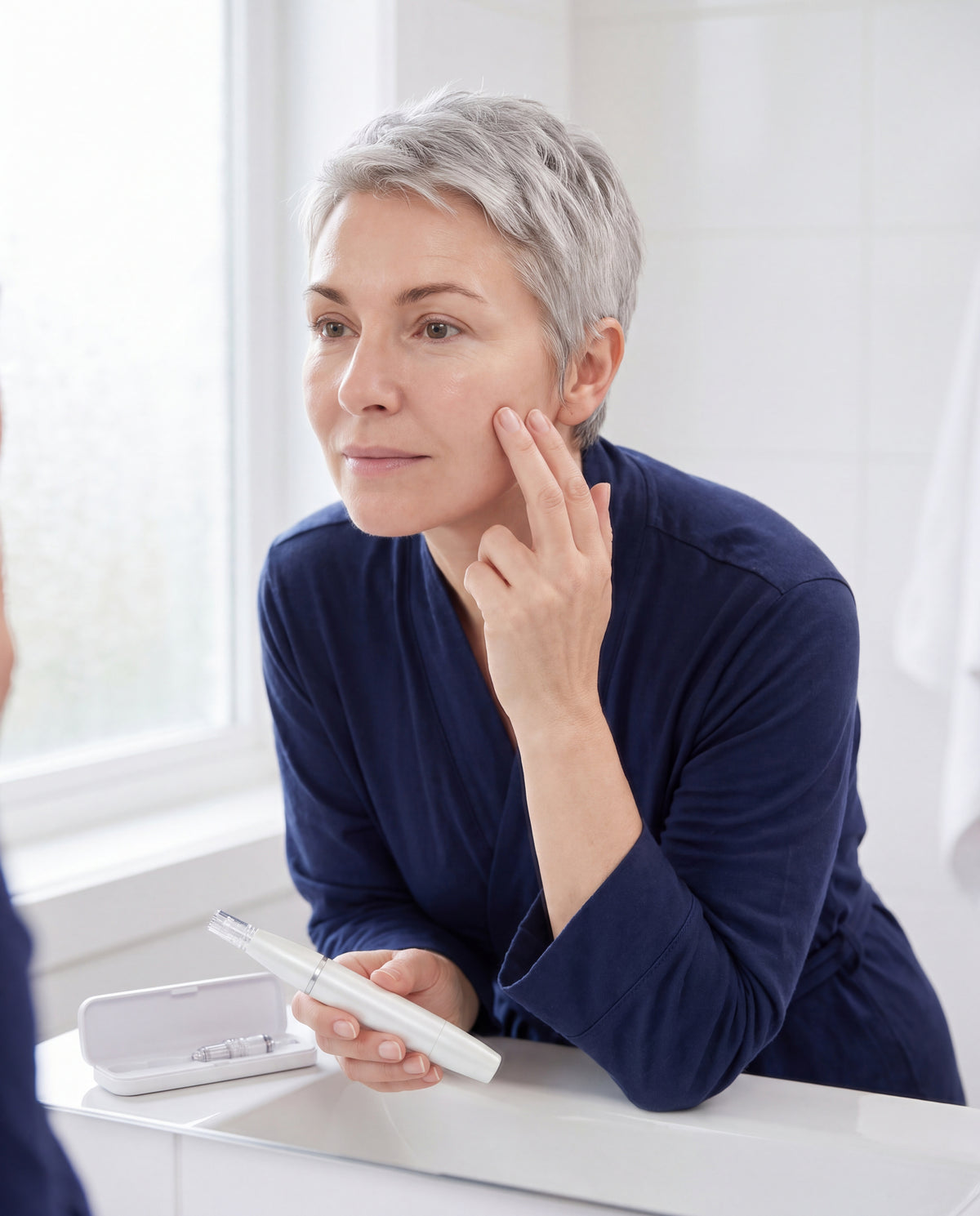
Use it every two weeks at depths up to 0.5 mm, after any redness has gone. In a small randomised split-face study of 16 people followed for 72 hours, the skin’s barrier recovered in 48 to 72 hours after ordinary 0.25 and 0.5 mm microneedles (Tao 2017; funded by the National Natural Science Foundation of China and a Jiangsu programme, though one author works for a nanochip maker and the study also tested nanochip tips), so the skin has long settled by the next session.
Two weeks is also the gap the clinic trial we cite used: five sessions in 28 adults (Liang 2022, in the FAQ below). At a shallower 0.2 mm, a home-use study ran sessions twice a week for three months with no serious side effects (Quinlan 2022, in the FAQ).
Deeper settings need longer gaps: at least three weeks after a 1.5 mm roller (Singh and Yadav 2016) and about 3 to 8 weeks between clinic sessions (Cleveland Clinic).
How are microneedling pens regulated?
In the US, the FDA classified microneedling devices for aesthetic use as class II with special controls in 2018 (21 CFR 878.4430) and published final guidance on when a microneedling product is a medical device in November 2020 (FDA guidance).


Who should not use a microneedling pen at home, and when should you see a doctor?
Talk to a doctor first if any of these apply (Cleveland Clinic, Healthline 2019, NBC Select 2025):
- Skin conditions: eczema, psoriasis, rosacea, active acne, frequent cold sores or rashes, or very thin or sensitive skin.
- Medical history: a blood disorder or blood thinners, chemotherapy or radiation, acne medicine, or a tendency to form keloid scars.
- Moles, freckles, skin tags or growths that change or bleed.
- Pregnant or breastfeeding.
See a doctor if bleeding lasts over 24 hours, blisters form, or swelling lasts over a week (Cleveland Clinic).
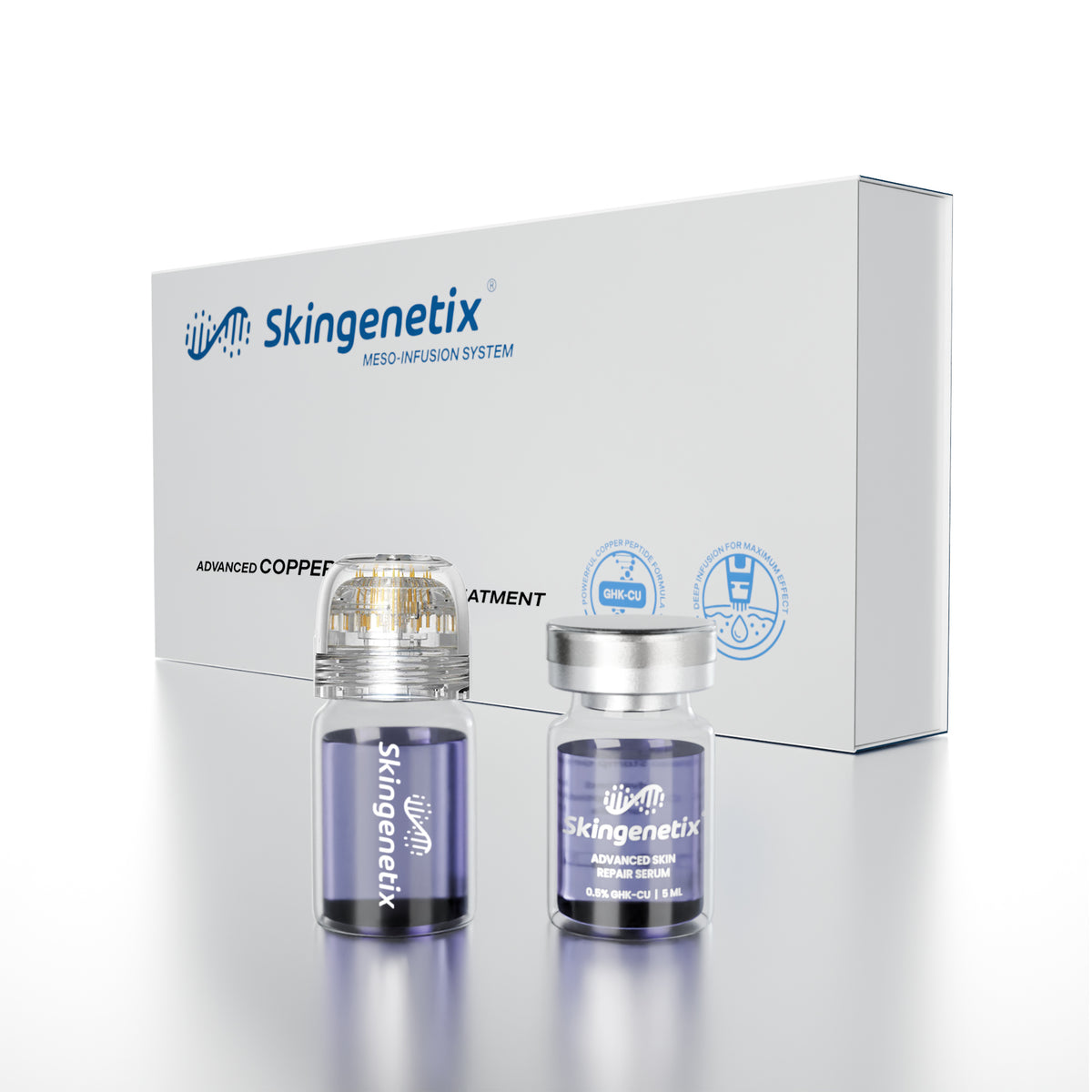
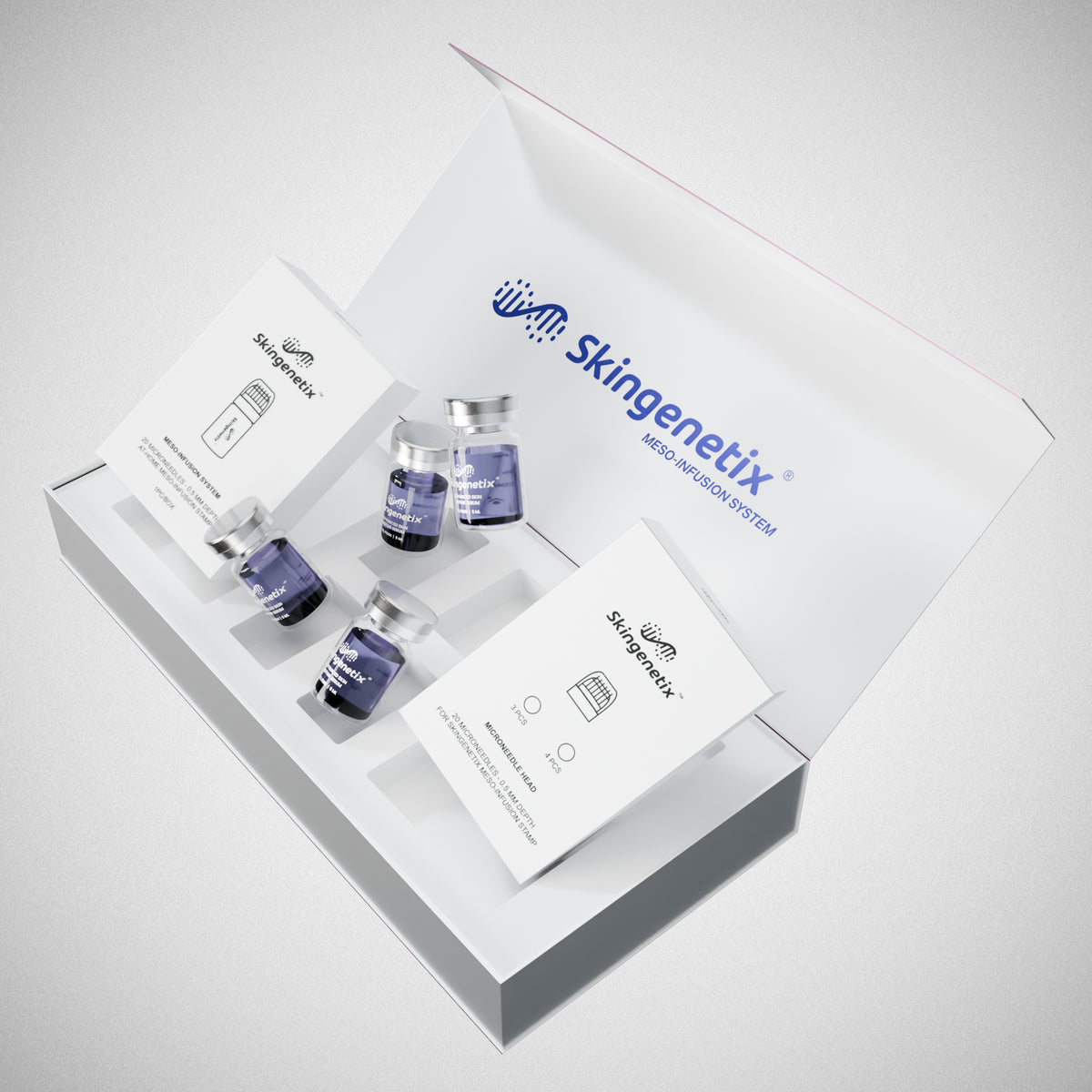
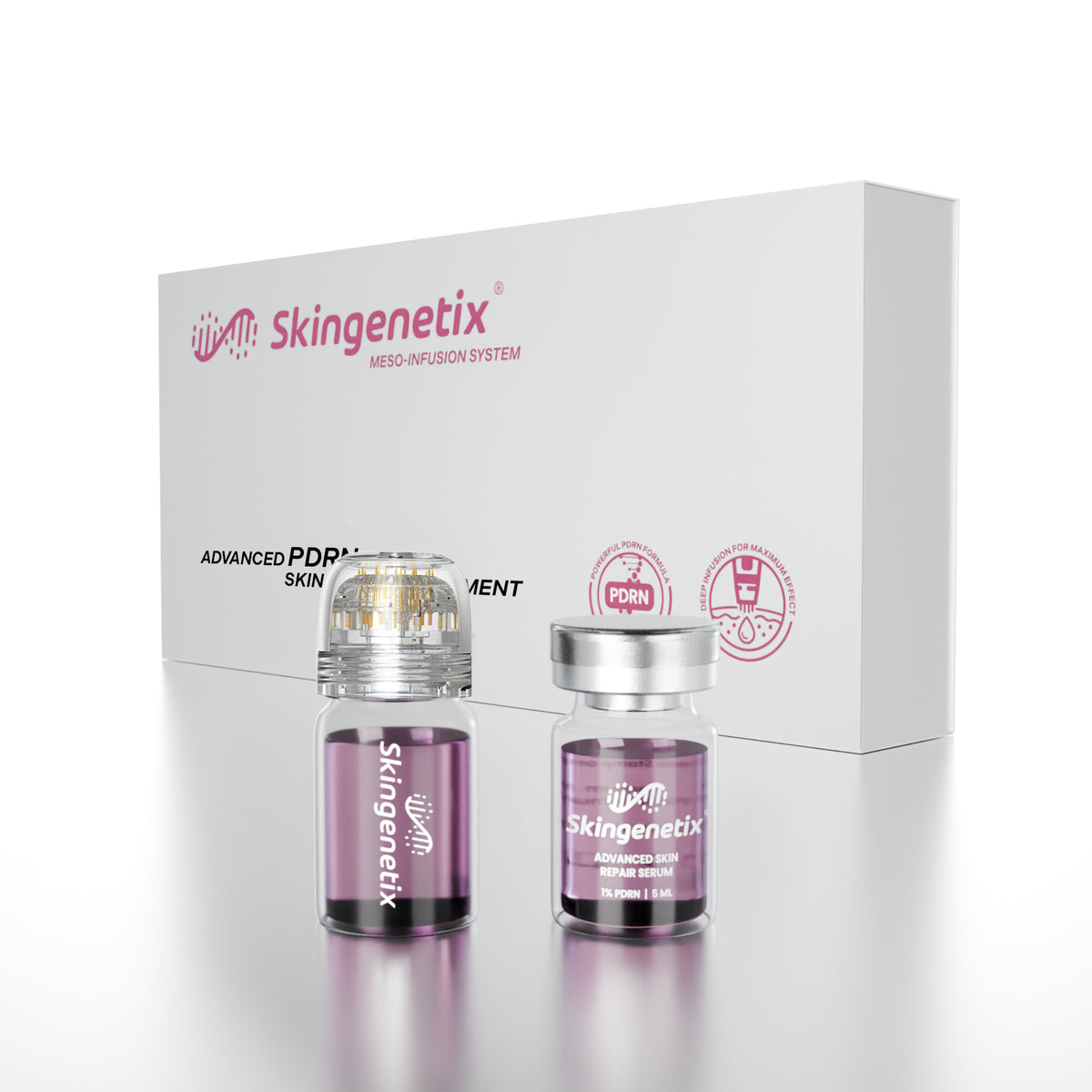
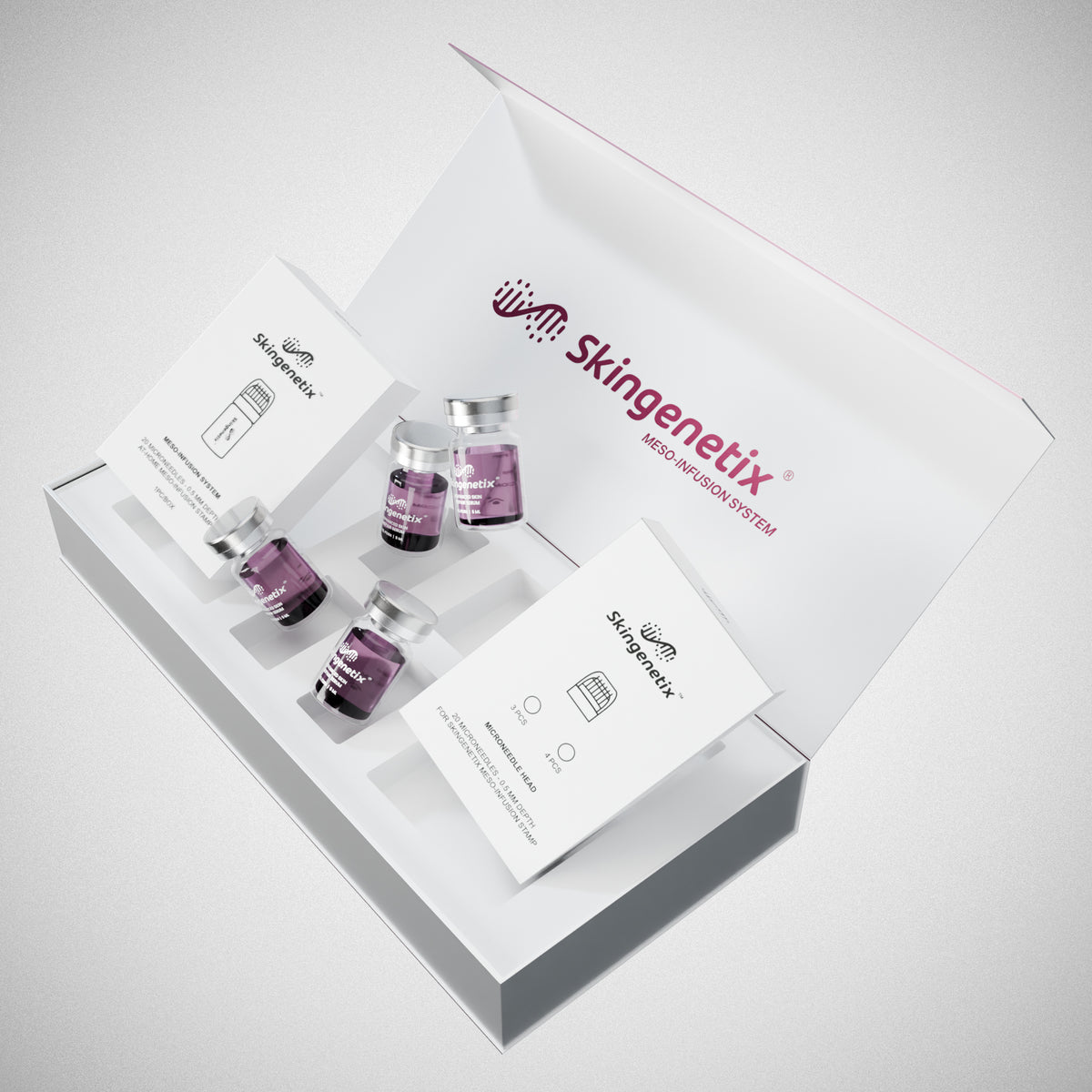
Our microneedling stamp sets each come with a reusable applicator, single-use sterile 0.5 mm needle heads and their own single-use serum vials; the directions are on each product page.
Microneedling pen FAQ
Does a derma pen work?
A 2025 systematic review and meta-analysis of 21 studies and 723 people found 83% were satisfied with facial microneedling, and the most common side effect was transient redness (6.8%) (Foppiani 2025; the studies varied in schedule and outcome measures; no specific funding, no conflicts declared). Five sessions with plain saline lowered facial wrinkle scores by about 40% in a controlled trial with a 0.5 mm roller, applied by clinicians; 0.5 mm is the length of our stamp heads (Liang 2022: randomised, split-face, 28 adults with ageing facial skin, a stem-cell serum on the other side, measured two weeks after the last session; funded by the Beijing Natural Science Foundation, no commercial ties declared). At home depth, one small uncontrolled study of 11 women aged 33 to 61 with mild to moderate wrinkles used a 0.2 mm device twice a week for three months with a commercial growth-factor serum: skin texture improved 17.6% and wrinkle scores 17.3% (Quinlan 2022, Queen Mary University of London; received no funding; authors have no stake in the products). NBC’s dermatologists say shorter home needles injure less and so work less than office treatment.
Is a microneedling pen better than a derma roller?
A pen sets depth on the device, while a roller’s depth varies with pressure (Singh and Yadav 2016), so a pen suits people who want that control.
Can you reuse a microneedling pen cartridge?
Use a new one each session. The American Academy of Dermatology 2018 release warned that home devices are hard to keep clean and their needles dull quickly. A cartridge is sterile only until it is used.
Can you use a microneedling pen around your eyes?
Avoid the eye area and lips, as our stamp-set directions do. The skin there is thin, and clinics use shorter needles for it (Singh and Yadav 2016).
Appraised by the Skingenetix Research Team. Medically reviewed by Dr Esther Bodde, Cosmetic & Medical Physician.
Last reviewed 19 November 2026.
More on microneedling
What Is Microneedling? What It Does, What It Can’t, and What the Research Shows
Microneedling at Home: How to Do It on Your Face and What to Expect
Microneedling Aftercare, Day by Day: What to Put on Your Skin and When
Microneedling Cost: Clinic Prices vs At Home, per Session